
Mastery Paths
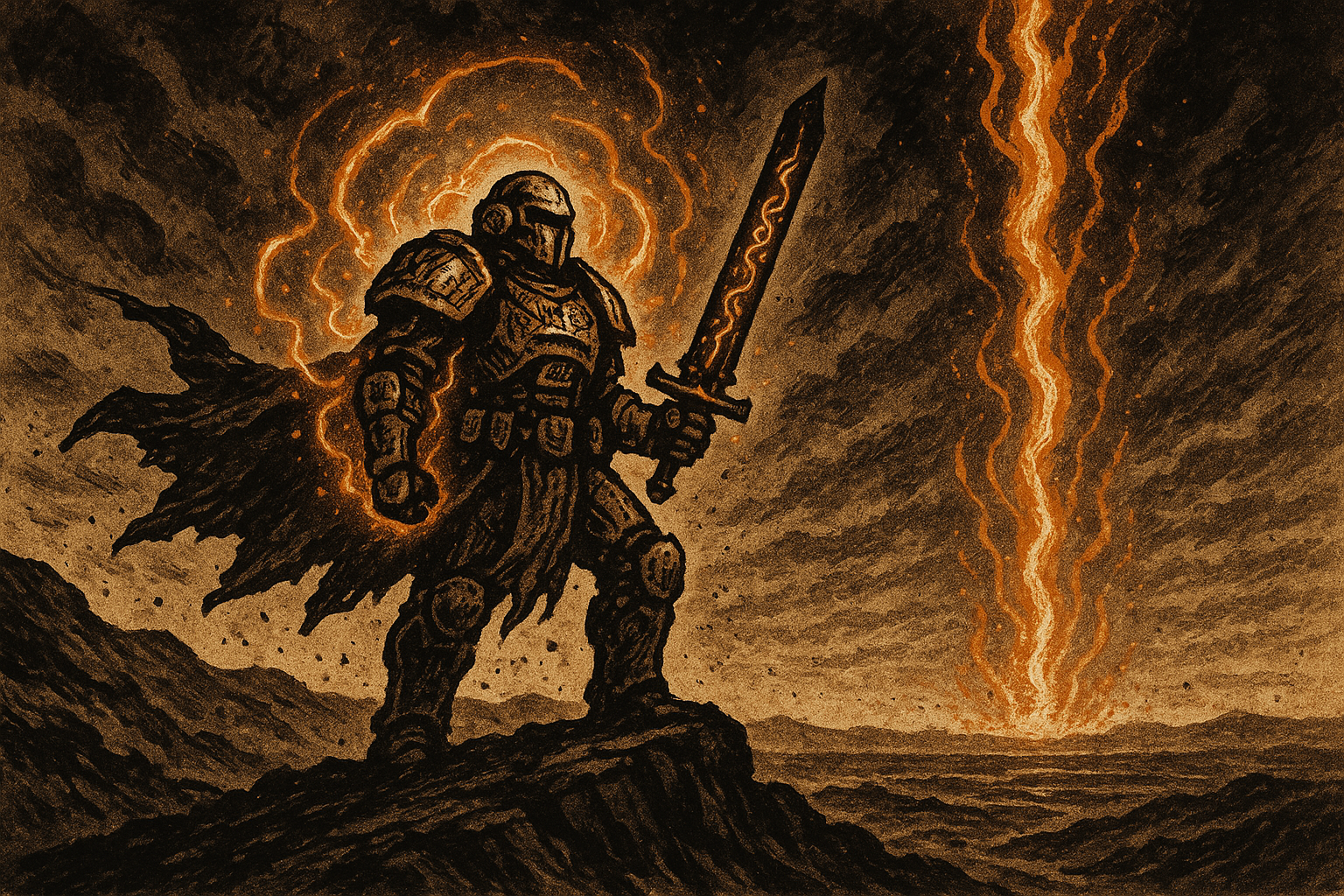
v0.5 Classless System: Mastery Paths are available at Level 11 regardless of which chassis or skill trees you have invested in. Prerequisites are stat + narrative based (see each path's Prerequisites block) — not build-locked. The recommended build names used in examples below (Warrior, Operative, etc.) refer to character build concepts, not locked class requirements.
At 11th level, characters deepen their identity by choosing a Mastery Path—a specialized calling that represents the culmination of both skill and experience. These paths blend martial prowess, arcane study, technological augmentation, and spiritual enlightenment into powerful cross-disciplinary specializations.
Each Mastery Path has strict prerequisites: a character must meet both the stat requirements and fulfill a narrative prerequisite—a specific achievement or experience that opens the door to mastery. These are not mere feats; they are transformative moments that reshape who the character is.
Advancement: Mastery Paths grant new abilities at levels 11, 13, and 15. The 15th level feature is always a capstone—a once-per-long-rest ultimate ability that defines the master's legend.
Capstone Cost: All Level 15 capstone abilities impose 2 levels of exhaustion after their effect ends, unless noted otherwise. This reflects the extraordinary physical, mental, or spiritual toll of channeling power at this magnitude. At 2 exhaustion (Weary), a character suffers disadvantage on ability checks and attack rolls with halved carrying capacity — serious but recoverable over two short rests (16 hours) without requiring a Long Rest. This standardized cost ensures capstones feel consequential without being punitive. The sole exception is Lifebringer's Resurrection, which imposes 3 levels — raising the dead demands a price beyond what other capstones extract.
1. Wasteland Knight
In a world of ash and ruin, some warriors become more than soldiers—they become living fortresses, bound by sacred oath to protect what remains. Wasteland Knights channel divine or primal energy through their armor, transforming themselves into unbreakable bulwarks against the darkness. They are the last paladins, the shield-bearers who stand between their people and annihilation.
Prerequisites:
- Might 15, Endurance 14
- Narrative: Swore a binding oath to protect a person, settlement, or ideal
Level 11 Features
Oath Bond: When defending your oath (as judged by the GM), you gain +2 to all saving throws and your spell attacks deal an additional 1d6 damage. Your conviction fuels your power.
Armored Grace: While wearing heavy armor and wielding a shield, you gain +1 to all saving throws. Additionally, your DV cannot be reduced below 15 by any effect while you are wearing heavy armor. Your armor has become an extension of your will — not a burden but a fortress.
Level 13 Features
Aegis Reaction: When an ally within 30 feet takes damage, you can use your reaction to teleport to a space adjacent to them and absorb half the damage they would take. You can use this feature a number of times equal to your proficiency bonus per long rest.
Consecrated Weapon: Choose one weapon. It permanently deals an additional 1d6 radiant damage. If the weapon is lost or destroyed, you can consecrate a new weapon during a long rest.
Level 15 Capstone
Bastion : As an action, you create a 30-foot-radius zone of protection centered on yourself for 1 minute. While active:
- All allies within the zone gain +3 Defense Value and resistance to all damage types
- All enemies within the zone have disadvantage on attack rolls and their movement speed is reduced by 10 feet
- You cannot move from your position while Bastion is active (though you can still act normally)
Your body becomes an immovable fortress, and the very air around you rejects harm to those you protect.
After Bastion ends, you suffer 2 levels of exhaustion. Becoming an immovable fortress drains even the hardiest knight.
2. Ghost
Some infiltrators don't just hide—they cease to exist. Ghosts are masters of the impossible entry, the perfect assassination, the vanishing act that leaves enemies questioning reality itself. Through a combination of advanced training, subtle magic, and augmentation, they slip between the cracks of perception and strike from the spaces where light doesn't reach.
Prerequisites:
- Agility 16
- Narrative: Completed an infiltration mission deemed impossible by peers or experts
Level 11 Features
Phase Shift (2/Short Rest): Reaction when you would be hit by an attack or targeted by a spell, you become incorporeal until the end of the current turn, causing the attack or spell to pass harmlessly through you. While incorporeal, you cannot interact with physical objects.
Silent Kill: When you reduce a creature to 0 hit points, you can choose to remain hidden. Any witnesses must succeed on a Perception check (DC = 8 + your proficiency bonus + your Agility modifier) to determine your location.
Level 13 Features
Impossible to Track: You cannot be tracked by nonmagical means. Magical tracking requires a successful contested Intellect check against your Agility modifier.
Ghostly Strikes: When you attack from hiding, your attacks deal an additional 2d6 damage and the target cannot identify your location or appearance even if they survive. They know they were attacked, but not by whom.
Level 15 Capstone
Perfect Invisibility . You become perfectly invisible for up to 10 minutes. Unlike normal invisibility:
- You remain invisible even when attacking or casting spells
- You do not leave footprints, make sounds, or produce any detectable signature
- Magical detection (such as Detect Magic or divination spells) requires a DC 20 Perception or Arcana check to pierce your invisibility
- You can bring one willing ally with you into invisibility (they must remain within 5 feet of you or the effect on them ends)
Counterplay — Killing Blow Echo: When you make an attack from Perfect Invisibility, your general location is revealed in a 10-foot radius (not a 5-foot square) until the start of your next turn. You remain invisible and cannot be targeted directly, but enemies can target the 10-foot area with area attacks, readied actions, or effects that don't require sight.
Additionally, after you make an attack from Perfect Invisibility, creatures that can see the area where you attacked gain advantage on Perception checks to detect you until the end of your next turn. The DC remains 20, but the advantage gives trained observers a realistic chance.
Assassination Window: The first attack you make from Perfect Invisibility each activation automatically scores a critical hit if it hits. After this first strike, subsequent attacks follow normal rules (advantage from being unseen, but no automatic critical). The Ghost gets one perfect kill — not infinite ones.
The effect ends early if you choose, fall unconscious, or take damage from an area effect that targets the revealed 10-foot radius. When Perfect Invisibility ends, you suffer 2 levels of exhaustion.
3. Arcanist
Where most mages follow established formulae, Arcanists rewrite the laws of magic itself. They are innovators and theorists who have pushed beyond the boundaries of conventional spellcasting to develop entirely new techniques. Their magic is fluid, adaptable, and devastating—shaped by pure intellect and force of will rather than rote memorization.
Prerequisites:
- Intellect 16, Wisdom 14
- Narrative: Created a new magical formula, spell, or technique recognized by the arcane community (or proved independently)
Level 11 Features
Metamagic: You learn two metamagic options from the following list:
- Empower: Reroll a number of damage dice equal to your Intellect modifier (minimum 1)
- Extend: Double a spell's duration (if it has a duration of 1 minute or longer)
- Twin: Target a second creature with a single-target spell
You have a number of uses equal to your Intellect modifier per short rest. Each use applies one metamagic effect to a single spell.
Spell Resistance: You have advantage on saving throws against spells and +2 Defense Value against spell attacks.
Level 13 Features
Arcane Wellspring: At the start of your turn in combat (once per combat), you can recover one expended spell slot of 4th level or lower.
Level 15 Capstone
Magnum Opus : You can unleash the culmination of your magical research in one of two ways:
Option 1—Perfect Casting: Cast a spell you know at 3 levels higher than the slot you expend (minimum 1st level slot), and apply one metamagic effect to it for free without expending a use.
Option 2—Theoretical Improvisation: Make a DC 25 Arcana check to cast any spell of 5th level or lower that you have witnessed in the last 24 hours, even if you don't know it. On a failure, you expend the spell slot but nothing happens.
Regardless of which option you choose, you suffer 2 levels of exhaustion after casting. Channeling this much arcane power through a mortal frame leaves you shaking and drained.
4. Cyberlord
Most people who push their augmentation too far die on the operating table—or lose their minds to the machine. Cyberlords are the rare few who survived the edge of transformation and emerged as something more than human, more than machine. They are hybrids who command technology as naturally as breathing, their bodies a fusion of flesh, chrome, and raw data.
Prerequisites:
- Intellect 15, Humanity 6 or lower
- Narrative: Survived a near-fatal augmentation procedure or catastrophic cybernetic failure
Level 11 Features
Machine Symbiosis: You are immune to EMP effects and cannot be hacked. Your augments heal naturally during rest like biological tissue (or can be repaired with Medicine checks as if they were wounds).
Integrated Systems: You gain two cybernetic augments of your choice without paying their Humanity cost. These augments are so perfectly integrated that they do not register as foreign to your system.
Level 13 Features
Overclock Protocol : 1 Action, you can overclock all your augments for 1 minute. All numerical bonuses from your augments increase by 50% (round down). You do not suffer exhaustion from overclocking.
Neural Network: You can interface with any computer or electronic device by touch. Basic operations (unlock, access files, disable alarm) automatically succeed. Complex operations require an Intellect check with advantage.
Level 15 Capstone
Technological Singularity : For 10 minutes, you ascend to a higher state of existence:
- Gain +2 Intellect and +1 to all other ability scores. These bonuses are subject to the normal attribute cap and cannot raise any score above the bounded accuracy limit (+14 bonus).
- Gain 360-degree vision and cannot be surprised.
- You are immune to critical hits (attacks against you cannot crit; treat natural 20s as normal hits).
- You can issue commands to up to three electronic devices within 120 feet using a single action. Each device executes one command (attack, move, activate, deactivate). Alternatively, devices can follow standing orders without requiring your action — they repeat their last command each round until you change it or they are destroyed. Commanding devices and maintaining standing orders does not require concentration (this is data processing, not mental focus).
- You gain one additional reaction per round. This reaction can only be used for defensive reactions (opportunity attacks, Shield, defensive class features) — not for offensive abilities.
After the effect ends, you suffer 2 levels of exhaustion as your systems crash and reboot.
5. Warden
The deep wasteland claims most who venture into it. Wardens are those who not only survived but thrived—who learned to read the land, command its beasts, and become apex predators in the most hostile environment on Earth. They are rangers, druids, and survivalists who have bonded with the wasteland itself, becoming its avatar and protector.
Prerequisites:
- Wisdom 15, Endurance 14
- Narrative: Survived alone in the deep wasteland for at least 30 consecutive days
Level 11 Features
Wasteland's Chosen: You are immune to environmental hazards (radiation, extreme heat/cold, toxic atmosphere, etc.). You can automatically forage enough food and water for yourself and up to 6 companions in any wasteland environment.
Beast Bond: You can tame and bond with one beast whose challenge rating is equal to or less than your level divided by 3 (rounded down). The beast is fiercely loyal, follows your commands, and fights alongside you. If it dies, you can bond with a new beast during a long rest.
Level 13 Features
Terrain Mastery: Choose a terrain type (wasteland, ruins, desert, forest, etc.). In your chosen terrain:
- You cannot be surprised
- You have +3 to Stealth and Perception checks
- Your party can travel at full speed through difficult terrain
Nature's Fury : As an action, you summon environmental hazards in a 30-foot area within 60 feet (rockslide, sandstorm, thorns, etc.). Creatures in the area take 3d6 damage (type appropriate to terrain) and must succeed on a Reflex save (DC = 8 + proficiency + Wisdom modifier) or be restrained until the start of your next turn.
Level 15 Capstone
Apex Predator : You transform into a primal version of yourself for 1 minute:
- Gain +4 Might and +4 Agility
- Your Defense Value becomes 18 (if it isn't already higher)
- You gain two claw attacks (2d8 + Might modifier each) and can make both as a single Attack action
- Your movement speed increases to 60 feet
- You gain darkvision out to 120 feet
- Your beast companion also transforms, gaining +2 to all stats and advantage on attack rolls
After the transformation ends, you suffer 2 levels of exhaustion.
6. Sovereign
Power is not taken—it is built, vote by vote, alliance by alliance, until a settlement looks to you as its rightful leader. Sovereigns are those rare individuals who command not through fear but through legitimate authority, having built something worth protecting in the wasteland. Their word is law, their presence is inspiring, and their authority can bend the will of even the strong.
Prerequisites:
- Presence 16
- Narrative: Command the loyalty of a settlement with at least 50 inhabitants, or hold recognized authority over an equivalent group
Level 11 Features
Seat of Power: Your settlement generates resources (as negotiated with your GM—could be rations, equipment, information, or currency). Once per session, you can levy your militia: summon 2d20 warriors (10 HP, 13 DV, +3 to hit, 1d6+2 damage) who will fight for you for up to 1 hour.
Royal Guard: You are accompanied by 4 elite guards sworn to your service. Each guard has 30 HP, 15 DV, +5 to hit, and deals 1d8+3 damage. If a guard dies, you can recruit and train a replacement during downtime (1 week).
Level 13 Features
Edict : You issue a royal command to a number of creatures equal to your Presence modifier who can hear and understand you. If they are loyal, neutral, or intimidated, they must succeed on a Will save (DC = 8 + proficiency + Presence modifier) or be compelled to follow your order to the best of their ability for 24 hours. The order cannot directly cause self-harm.
Diplomatic Immunity: You have advantage on all social skill checks when interacting with officials, faction leaders, or authority figures. You are recognized as a person of power, and most neutral parties will extend you the courtesy due to your station.
Level 15 Capstone
Manifest Authority : For 1 minute, you radiate an aura of undeniable authority in a 60-foot radius. All creatures in the aura must succeed on a Will save (DC 18) or treat you as a legitimate authority figure:
- They cannot attack you or your allies without provocation
- They will follow reasonable orders as if you were their commander
- They will defend you if attacked
- Creatures with a personal bond to you or who already follow you automatically fail the save
This is not mind control—creatures retain their autonomy and will not follow suicidal or character-breaking orders—but they perceive you as someone with the right to command.
After Manifest Authority ends, you suffer 2 levels of exhaustion. The sheer force of will required to project authority at this scale leaves you physically and mentally spent.
7. Deathdealer
Some fighters learn technique. Others accumulate scars. Deathdealers have reduced killing to an art form—a brutal, efficient machine that never stops, never hesitates, and leaves only corpses in its wake. They have stared down death so many times that they've become its agent, and their reputation alone is enough to break lesser warriors.
Prerequisites:
- Agility 15 or Might 15
- Narrative: Single-handedly killed a creature with a challenge rating of 10 or higher
Level 11 Features
Killing Machine: Whenever you reduce a creature to 0 hit points with a melee or ranged attack, you can immediately make one additional weapon attack against a different creature within range. This can chain indefinitely as long as you keep dropping enemies.
Threat Assessment: As an action, you can assess a creature you can see, learning its exact current hit points, Defense Value, and any damage resistances or vulnerabilities.
Level 13 Features
Flurry of Death : When you take the Attack action, you can make a number of additional attacks equal to your proficiency bonus. Each attack after the first takes a cumulative -2 penalty to the attack roll (-2 for the second extra attack, -4 for the third, etc.).
Dread Reputation: When a creature sees you kill another creature, it must succeed on a Will save (DC = 8 + proficiency + Might or Agility modifier) or become frightened of you until the end of your next turn.
Level 15 Capstone
Death's Harvest : For 1 minute, you become a reaper of souls:
- Any damage you deal to a creature forces a Fortitude save (DC 18) or the creature takes an additional 3d6 necrotic damage
- You heal hit points equal to all necrotic damage you deal
- Any creature you kill while Death's Harvest is active cannot be resurrected by any means for 30 days
Your eyes turn black, your weapons drip with shadow, and even your allies feel a chill in your presence.
After Death's Harvest ends, you suffer 2 levels of exhaustion. Channeling the power of death itself exacts a toll on even the most hardened killer.
8. Lifebringer
In a world defined by death, some rare souls learn to defy it. Lifebringers are those who have dragged someone back from the absolute brink—not through luck, but through skill, will, and a profound understanding of the thread that binds spirit to flesh. They are healers, priests, and medics who stand as the last barrier between their companions and the void.
Prerequisites:
- Wisdom 16
- Narrative: Saved someone from certain death through healing, medicine, or resurrection magic (as judged by GM)
Level 11 Features
Healing Mastery: All healing you provide (through spells, abilities, or Medicine checks) is increased by 50% (round down).
Purity: You are immune to disease and poison. You can cure disease in yourself or others a number of times equal to your Wisdom modifier per long rest (no action required, touch range).
Level 13 Features
Restoration : You can end one of the following conditions affecting a creature you touch: blinded, deafened, paralyzed, petrified, stunned, or 1 level of exhaustion. Alternatively, you can restore a lost limb or organ over the course of 1 hour of concentration.
Life Link: You can maintain a life link with up to 3 allies at a time (established during a short or long rest). When a linked ally takes damage, you can choose to absorb half of that damage (after resistances). You take that damage with resistance (meaning you take a quarter of the original damage).
Level 15 Capstone
Resurrection : You can perform a 1-hour ritual to revive a creature that has been dead for no more than 7 days (the body must be present, though it can be damaged). The ritual requires 5 Tier 4 resource tokens (expensive components, rare relics, etc.):
- The creature returns to life with half its maximum hit points
- The revived creature suffers 2 levels of exhaustion and takes -2 to all ability scores for 7 days
- You suffer 3 levels of exhaustion
This is true resurrection—soul, mind, and body restored—but it comes at tremendous cost.
9. Iron Sigil
The Iron Sigil movement began with those who refused to choose between magic and machine. Iron Sigils are technomancers who blur the line between spell and circuit, who power devices with raw mana and encode enchantments into silicon. They are the architects of the post-apocalyptic renaissance—building magitech wonders from scavenged components and pure will.
Prerequisites:
- Intellect 14, Wisdom 14
- Narrative: Successfully merged magic and technology in a significant way (created a magitech device, enchanted a machine, etc.)
Level 11 Features
Technomancy: You can power technological devices using spell slots (1st level slot = 1 hour of operation). You can also store a spell of 3rd level or lower into a technological device as a one-use charge. Activating the stored spell requires an action from anyone holding the device.
Overcharge (combat clause): 1 Action, you can overcharge a technological device you are holding or wearing by expending a spell slot. For 1 minute:
- Weapon: The weapon deals an additional 1d6 force damage per slot level expended (maximum 3d6 for a 3rd-level slot)
- Armor/Shield: The item grants +1 DV per slot level expended (maximum +3 for a 3rd-level slot)
- Other Device: The device's primary function is enhanced at GM discretion (e.g., a scanner's range doubles, a communicator penetrates signal jamming)
When the overcharge ends, the device takes 1d4 damage per slot level and cannot be overcharged again until repaired (Technology check DC 12, 10 minutes). If the device is reduced to 0 HP by this damage, it is destroyed.
Magitech Interface: You can cast detect magic at will. You can identify the properties of a magic item in 1 minute of examination (no check required).
Level 13 Features
Sigil Crafting: You can create temporary enchantments on weapons or armor:
- Expend a 2nd-level spell slot and spend 1 hour: Grant +1 bonus to attack/damage or +1 Defense Value for 24 hours
- Expend a 4th-level spell slot and spend 1 hour: Grant +2 bonus for 24 hours
Only one sigil enchantment can be active per item.
Reactive Sigil (combat clause): As a reaction when you or an ally within 30 feet is hit by an attack, you can expend a 1st-level spell slot to inscribe a protective sigil on their armor or body. The target gains +2 DV until the end of their next turn. This bonus stacks with existing sigil enchantments (it is a separate, temporary effect).
At 15th level, you can expend a 2nd-level slot instead to make the Reactive Sigil also grant resistance to the damage type of the triggering attack until the end of the target's next turn.
Stacking Note: Overcharge, Reactive Sigil, and Sigil Crafting bonuses can stack on the same item — they are separate effects from different sources. The total cost in spell slots is the balancing factor.
Spell Engine: You can create a device that stores up to 3 spell slots of any level. You or your allies can tap the device to cast spells using the stored slots. Refilling the engine requires you to expend spell slots during a rest.
Level 15 Capstone
Convergence . For 1 minute, you create a 30-foot-radius aura of perfect technomagical synergy:
- All technological devices within the aura operate at maximum capacity Reaction
- All spells cast within the aura are treated as if cast using a slot 1 level higher
- All allies within the aura gain +2 to all ability scores
- You can cast spells through any technological device within the aura (using it as a focus or delivery mechanism)
Singularity Core (personal combat benefit): While Convergence is active, you are the nexus of the aura. You gain the following personal benefits:
- Your spell attacks deal an additional 1d8 force damage
- Your weapon attacks are treated as magical and deal an additional 1d8 force damage
- You gain +2 DV as technomagical energy shields your body
- You can use Overcharge (see L11) without expending a spell slot and without damaging the device. During Convergence, your mastery is absolute — technology bends to your will without breaking.
When Convergence ends, all technology within the aura shuts down for 1 round as it reboots. You suffer 2 levels of exhaustion.
10. Voidwalker
There are spaces between spaces—rifts in reality where the laws of physics bend and break. Voidwalkers have touched these extraplanar phenomena and survived with their sanity (mostly) intact. They have learned to step through the cracks in the world, to see what should not be seen, and to manipulate the very fabric of dimensional space.
Prerequisites:
- Wisdom 15, Presence 14
- Narrative: Touched, entered, or survived direct contact with extraplanar phenomena (portal, dimensional rift, elder entity, etc.)
Level 11 Features
Rift Step (2/Short Rest): 1 Action, you can teleport up to 60 feet to an unoccupied space you can see. You can bring one willing creature of your size or smaller who is within 5 feet of you.
Void Sight: You can see invisible creatures and objects. You automatically detect portals, dimensional rifts, and similar phenomena within 120 feet. You can perceive "adjacent" dimensions as ghostly overlays (GM's discretion on what you see).
Level 13 Features
Dimensional Anchor : As an action, you target one creature you can see within 60 feet. It must succeed on a Will save (DC = 8 + proficiency + Wisdom modifier) or be unable to teleport, plane shift, or use dimensional travel for 1 minute.
Rift Shield : When you are hit by an attack, you can use your reaction to open a momentary rift. The attack is redirected to a random creature within 15 feet of you (ally, enemy, or the original attacker — all creatures within range are eligible targets, determined randomly by the GM).
Using Rift Shield is voluntary — you may choose not to activate it after learning the result of the attack roll. If no valid targets other than your allies are within 15 feet, you may choose not to use the reaction; the attack hits you normally. A Voidwalker is never forced to redirect damage to a companion.
Level 15 Capstone
Banishment : You open a rift to a pocket dimension. Choose one of two effects:
Option 1—Exile: Target one creature within 60 feet. It must succeed on a Will save (DC 18) or be banished to a harmless demiplane for 1 minute. The creature repeats the save at the end of each of its turns. If it fails 3 saves, the banishment becomes permanent until someone retrieves it (requires a 7th-level dimensional spell or the Gateway option of this ability used from the same plane).
Option 2—Gateway: You open a stable portal to any location you have visited before (same plane of existence only). The portal remains open for 1 round and can transport up to 6 creatures.
Regardless of which option you choose, you suffer 2 levels of exhaustion. Tearing open the fabric of reality is not a gentle act.
11. Beastlord
Most people fear the mutated beasts of the wasteland. Beastlords respect them—and command them. Through a deep spiritual connection forged in life-or-death circumstances, Beastlords have become alphas of the wild, speaking the wordless language of claw and fang. They are shapeshifters, beast masters, and primal warriors who blur the line between human and animal.
Prerequisites:
- Endurance 15, Wisdom 14
- Narrative: Saved the life of a powerful creature (challenge rating 5+) or earned the respect of a beast pack
Level 11 Features
Alpha Bond: You gain a powerful beast companion with a challenge rating equal to your level divided by 3 (rounded down, minimum CR 3). The beast acts on its own initiative, but you can command it using a free action. It is fiercely loyal and will defend you with its life.
Pack Tactics: When you and your beast companion are both adjacent to the same enemy, both of you have advantage on attack rolls against that enemy.
Level 13 Features
Beastform : You can transform into the form of your bonded beast for up to 1 hour. While transformed:
- You gain the beast's physical ability scores (Might, Agility, Endurance) but retain your own mental scores (Intellect, Wisdom, Presence)
- You gain the beast's natural attacks, movement modes (swim, climb, fly), and senses
- You retain your class features and can speak (though your voice is guttural)
- You have a separate pool of hit points equal to the beast's maximum HP
Empathic Link: You have a telepathic bond with your beast companion at any distance. You can see through its senses as an action.
Level 15 Capstone
Chimera Form . For 10 minutes, you and your beast companion merge into a single terrifying hybrid:
- You become Large size (if you weren't already)
- Gain +3 Might and +3 Endurance
- Your Defense Value becomes 18 (if it isn't already higher)
- You can make 3 attacks per Attack action, each dealing 2d10 + Might modifier damage
- Your movement speed increases to 50 feet
- You emit a frightful presence: enemies within 30 feet who can see you must succeed on a Will save (DC = 8 + proficiency + Presence modifier) or be Frightened for 1 minute (save repeats at end of each of their turns)
- You gain your beast companion's senses and any natural abilities (darkvision, scent, etc.)
Primal Adaptation Free : The Chimera is constantly shifting, drawing on the primal essence of your bond. At the start of each of your turns while in Chimera Form, choose one of the following adaptations. The adaptation lasts until the start of your next turn, when you choose again:
- Armored Hide: Gain resistance to one damage type of your choice (bludgeoning, slashing, piercing, fire, cold, or electric)
- Apex Predator: Gain a special movement mode — burrow 20 ft, fly 30 ft, or swim 40 ft
- Tremor Sense: Gain tremorsense 30 ft. You cannot be surprised and have advantage on attacks against creatures you can detect with tremorsense
- Venomous Strike: Your natural attacks inflict an additional 1d6 poison damage. Targets hit must make a Fortitude save (DC = 8 + proficiency + Might modifier) or be Poisoned until the end of their next turn
Predatory Momentum: When you reduce a creature to 0 HP while in Chimera Form, you can immediately move up to 15 feet toward another enemy (this movement does not provoke opportunity attacks) and make one additional melee attack as a free action. This can trigger only once per turn.
After the transformation ends, you suffer 2 levels of exhaustion.
12. Arsenal
Most fighters specialize. Arsenal masters refuse. They are the ultimate generalists—warriors who have achieved such complete martial mastery that they can wield any weapon as if it were an extension of their body. They are duelists, gladiators, and tournament champions who adapt their fighting style from second to second, keeping enemies perpetually off-balance.
Prerequisites:
- Agility 14, Intellect 14
- Narrative: Won a significant combat tournament, arena championship, or formal duel against renowned opponents
Level 11 Features
Weapon Chameleon: You can draw or stow weapons without using an action. You gain proficiency with all weapons. For every different weapon you attack with in a 24-hour period, you gain a cumulative +1 bonus to attack rolls and damage rolls with all weapons (maximum +3). This bonus resets when you finish a long rest.
Combat Analysis: As an action, you can study a creature you can see. You learn its Defense Value, saving throw bonuses, damage resistances, and damage vulnerabilities.
Level 13 Features
Adaptive Fighting Style: At the start of each of your turns, you can choose one of the following benefits until the start of your next turn:
- Power: +2 to damage rolls
- Defense: +2 Defense Value
- Speed: Make one additional attack when you take the Attack action
- Reach: Your melee attacks gain +10 feet reach
Disarm Mastery: When you hit a creature with a melee weapon attack, you can attempt to disarm it (once per turn). The target must succeed on a contested Agility check or drop one held item of your choice. The item flies 15 feet in a random direction.
Level 15 Capstone
One-Man Army : For 1 minute, you become a whirlwind of steel:
- When you take the Attack action, you can attack two different targets with two different weapons as part of the same action. Each attack uses the appropriate weapon's stats. You must be wielding or able to draw both weapons Free .
- Your critical hit range increases to 18-20 with all weapons.
- Each time you attack with a different weapon in the same turn, your attacks deal an additional 1d6 damage (cumulative — second weapon adds +1d6, third adds +2d6, etc.).
- You can switch weapons freely without any action cost, and you can wield any weapon in any hand regardless of properties (you could dual-wield greataxes if you have them).
You still have 3 actions per turn. The difference is that each Attack action now hits two enemies — you're not getting more turns, you're making each turn devastatingly efficient. Over 3 actions, that's up to 6 attacks at escalating damage.
After One-Man Army ends, you suffer 2 levels of exhaustion. Sustaining that level of martial perfection — dual-target strikes, expanded critical range, and seamless weapon mastery — pushes your body to its absolute limit.
13. Ascendant
Every Psion learns to fear their own power. The Focus system is a tightrope — climb too high and Backlash rips through your nervous system like a short-circuiting power grid. Most Psions spend their careers managing that fear, pulling back before the edge, never discovering what lies beyond.
Ascendants walked past the edge. They hit Backlash — the real kind, the kind that ruptures blood vessels and stops hearts — and they survived. Not through luck or medical intervention, but through an act of will so profound that it rewired how their brain processes psionic energy. They didn't just survive the overload. They learned from it. Now they ride the Strained state the way a surfer rides a tsunami: with absolute focus, terrifying grace, and the full knowledge that one misstep means obliteration.
Ascendants are the rarest of Psions — the ones who stared into their own personal apocalypse and decided to live there.
Prerequisites:
- Wisdom 16, Might 14
- Narrative: Survived a Psionic Backlash that should have been fatal, OR achieved sustained Focus at or above your Backlash Threshold without losing control (at least 1 round at Threshold with no Backlash)
Accessibility note: While designed primarily for Psion characters, any character who has developed psionic abilities — through the Channeler's Oracle specialization, exposure to psionic phenomena, or other narrative circumstances approved by the GM — can pursue the Ascendant path if they meet the prerequisites.
Level 11 Features
Controlled Fury Passive
Additionally, when you take psychic damage from your own psionic abilities (Backlash, Strained self-damage, or Warden's Psionic Aegis feedback), you gain temporary HP equal to your WIS modifier. Your nervous system converts pain into reinforcement.
Controlled Fury extends the Psion's operational window in the Strained state. Without it, a Psion can sustain ~5 actions in Strained before Backlash becomes imminent. With Controlled Fury, the reduced self-damage buys 2-3 additional actions, and the temp HP creates a buffer. This is the "I can hold it longer" advancement that every Psion dreams about.
Psionic Resonance Passive
Psionic Resonance does not stack — if an ally already has temp HP from this feature, a new Surge refreshes the amount rather than adding to it.
Psionic Resonance turns the Psion's offensive actions into party support. Every Kinetic Wave, Psychic Lance, or Force Eruption now also protects the party. This is a passive benefit that rewards aggressive play — the more Surges you use, the more temp HP your allies receive. It also pushes Focus faster, creating the Ascendant's defining tension: doing more for your party by pushing yourself closer to the edge.
Level 13 Features
Backlash Channeling Reaction
- AoE damage increases from 2d6 to 4d6 psychic in a 20-foot radius (instead of 15 ft). Targets: Reflex save for half (DC = 8 + proficiency + WIS modifier).
- You are NOT stunned. Your trained neural pathways absorb the overload and channel it outward — the energy that would have paralyzed you is redirected into the blast.
- Self-damage remains: You still take 3d6 psychic damage (not reduced by resistance or Controlled Fury's temp HP). Backlash still hurts — you just stay conscious through it.
- Focus resets to 0 as normal. All threshold bonuses are lost.
You can choose the direction of the Backlash Channeling — selecting a 180-degree arc in front of you (instead of a full radius). Allies behind you are spared. Enemies in front of you are not.
If you have multiple abilities that modify Psionic Backlash (such as the Warden's Backlash Redirect), you choose which one to apply when Backlash triggers. You cannot apply more than one modifier to the same Backlash event.
Backlash Channeling is the Ascendant's signature: they don't fear Backlash anymore. They plan for it. A Psion who deliberately pushes into Backlash, channels the detonation into a 4d6 burst targeted at enemies, and then immediately uses Psionic Overcharge to re-enter Strained is performing the most advanced psionic combat technique in the game. It's incredibly risky, incredibly cool, and incredibly Ascendant.
Expanded Consciousness Passive
- Telekinesis — Gravity Well: 1 Action, Range 60 ft. 10-foot radius sphere. All creatures in the area must make a Fortitude save or be pulled to the center and restrained until the end of your next turn. Deals 2d6+WIS force damage. +2 Focus.
- Telepathy — Mass Suggestion: 1 Action, Range 60 ft. Up to 3 creatures must make Will saves or follow a single simple suggestion for 1 round (move, attack a target, drop an item, flee). Does not need to be the same suggestion for each target. +2 Focus.
- Psychokinesis — Psionic Detonation: 1 Action, Range 30 ft. 15-foot radius. 4d6+WIS force damage, Reflex save for half. Creatures that fail are knocked prone. This replaces Force Eruption's lower-damage version. +2 Focus.
If you know only 2 Disciplines (non-Psion Ascendant), you instead learn your 3rd Discipline with its standard Psi Strike modifier, passive utility, and Surge ability.
Level 15 Capstone
Transcendence
This is the moment. The moment every Psion has imagined and every Psion has feared. The moment you let go.
Activation: 1 Action. Duration: 5 rounds. No concentration.
For the duration of Transcendence:
- Your Backlash Threshold is doubled. If your normal Threshold is 9, it becomes 18. The ceiling is higher than you've ever reached — but it's still there. Push too far and Backlash still comes. The difference is you can push much further before it does.
- Strained state bonuses increase: +3 damage per die (instead of +2) and +2 to psionic save DCs (instead of +1).
- Self-damage while Strained is reduced to 1 flat damage per Focus gained (instead of 1d4). Your neural pathways are operating at peak efficiency — the strain is real but manageable.
- Psi Strike gains +1d8 bonus damage for the duration. Your attacks carry the weight of your unleashed potential.
- You gain blindsight 30 feet and are immune to the frightened and charmed conditions. Your mind is a fortress of concentrated will.
- When your Focus exceeds your normal Backlash Threshold (even though it's doubled), your psionic abilities create visible distortions — objects orbit you, the air ripples, light bends. Enemies within 15 feet must make a Will save (DC 8 + your proficiency bonus + your Wisdom modifier) or be Frightened until the end of their next turn (once per creature per Transcendence).
When Transcendence ends:
- Your Focus resets to 0
- You gain 2 levels of exhaustion
- All creatures within 15 feet (including allies) take 2d6 psychic damage from the residual psionic discharge (Will save for half, DC 8 + your proficiency bonus + your Wisdom modifier). You cannot control the discharge — it's the cost of returning to normal human cognition from a state that was never meant for human minds.
Transcendence Math (Level 15, WIS 18, normal Threshold 9 → doubled to 18):
- Duration: 5 rounds (not 10)
- Psi Strike at Strained: 3d8 + 9 (3/die) + 4 (WIS) + 1d8 (bonus) = avg ~28 per hit
- Over 5 rounds at 1 Focus/round: Focus reaches ~5-10. Threshold at 18 means Backlash is possible but unlikely at cautious play. Aggressive play (Surges at +2 Focus) could push to 10-15, approaching the doubled Threshold.
- Total damage over 5 rounds: ~140 single-target, ~250 with AoE Surges
- Compare to old Transcendence: 10 rounds × no Threshold = ~500+ damage. New version: 5 rounds × Threshold still exists = ~250. Roughly 2x reduction.
- Compare to Arcanist's Magnum Opus: single powerful spell vs. sustained enhanced psionic combat. Comparable power.
- The Fear aura when exceeding normal Threshold adds battlefield control value without raw damage.
"They tell you Backlash is a wall. That Focus builds until the wall breaks and your mind shatters against it. They tell you to stay below the wall. To manage your power. To be careful. I'm telling you something different: there is no wall. There never was. There's just fear — and on the other side of that fear, there is everything."
GM Guidance: Transcendence should be one of the most visually and narratively dramatic moments in any campaign. The Psion floats off the ground. Objects in the room orbit them. The air screams with displaced force. Their eyes blaze white. Everyone nearby feels the pressure — a physical weight, like standing next to a reactor core. This is the Psion's design intent made manifest: a character who spent 15 levels managing a reactor is now the reactor. Make it terrifying. Make it beautiful. Make the players at the table remember it.
14. Aberrant
Most survivors of the wasteland fear what the Fall made of the world's biology. Mutants learn to manage it, to harness the chaos in their cells on their own terms. Then there are those who stop managing — who let go of the desperate human need to remain human, and discover what they were always becoming.
Aberrants are not mutants who gained extra powers. They are mutants who accepted the transformation completely. Their bodies do not change because they are broken. Their bodies change because that is what they are now. The radiation didn't take something from them. It revealed what was always underneath.
They are not comfortable to be around. They are magnificent.
Prerequisites:
- Endurance 15, Might 13
- Narrative: Voluntarily exposed themselves to a major mutation event, OR survived an extreme mutation crisis without medical intervention — the body's own adaptation was the survival, not treatment
Accessibility note: While designed primarily for Mutant build characters, any character who has undergone a profound biological transformation — a Warden who survived a severe radiation event, a Channeler touched by alien mutation, or any character who has lived with significant mutagenic exposure — can pursue the Aberrant path if they meet the prerequisites.
Level 11 Features
Adaptive Regeneration Passive
Volatile Adaptation 1 Action
Different adaptations cannot be stacked — only one Volatile Adaptation can be active at a time. If you use Volatile Adaptation while an earlier adaptation is still active, the earlier one ends immediately and the new one begins.
| Mutation Category | Benefit |
|---|---|
| Armored Plating | +3 Defense Value. Any creature that hits you with a melee weapon attack takes 1d4 piercing damage (the plates bite back). |
| Toxic Secretion | Your unarmed attacks deal +1d8 acid damage. Creatures you are grappling take 1d6 acid damage at the start of their turn. |
| Sensory Enhancement | Blindsight 30 ft. You cannot be surprised. Advantage on Perception and Insight checks. |
| Predatory Musculature | +2 to attack rolls and damage rolls. Your movement speed increases by 10 ft. Disadvantage on Stealth checks (your body is visibly, wrongly, moving). |
| Neural Shock Web | When a creature hits you with a melee weapon attack, it must succeed on a Fortitude save (DC = 8 + proficiency bonus + END modifier) or be Stunned until the end of its next turn. This can occur once per round per creature. |
Level 13 Features
Mutation Cascade Reaction
Roll 1d6 to determine which mutation category manifests:
| d6 | Mutation |
|---|---|
| 1 | Armored Plating |
| 2 | Toxic Secretion |
| 3 | Sensory Enhancement |
| 4 | Predatory Musculature |
| 5 | Neural Shock Web |
| 6 | Regenerative Burst: Immediately regain HP equal to your level + END modifier |
Mutation Cascade manifests whether you want it to or not — it is involuntary. The adaptation lasts for 1 minute.
Override Rule: If you already have a Volatile Adaptation active when Mutation Cascade triggers, the Cascade replaces it immediately — the emergency response overrides the chosen one. You cannot hold both simultaneously. (The one exception is result 6, Regenerative Burst, which provides only the immediate HP recovery and does not replace your existing active adaptation.)
Aberrant Immunity Passive
Level 15 Capstone
Final Aberration
You have been fighting your body's transformations your entire life — managing the mutations, suppressing the cascades, choosing to stay recognizably human. In this moment, you stop fighting.
Activation: 1 Action. Duration: 1 minute (10 rounds). No concentration.
For the duration, you undergo a complete biological transformation. Your form stabilizes into something that should not exist — and does not stop:
- All five Volatile Adaptation effects are active simultaneously. Armored plating, toxic secretion, sensory enhancement, predatory musculature, and neural shock web all manifest at once.
- Adaptive Regeneration increases to your END modifier + proficiency bonus HP per turn (instead of just END modifier).
- Your unarmed attacks deal 2d8 + Might modifier damage. Your body has become a weapon in its own right — bone protrusions, hardened limbs, fluid toxic strikes, or something that no longer has a name — depending on how your character's mutations have expressed.
- Damage Threshold: Any attack that deals less than your proficiency bonus in damage (after applying resistances) does nothing — you do not suffer conditions that were imposed by the damage itself (such as Concentration disruption, Burning from a fire attack, or Prone from a critical hit), and do not take the damage. The attacker's action is still spent.
- Frightful Presence: When a creature first sees you in this form during a given Final Aberration activation, it must succeed on a Will save (DC = 8 + proficiency bonus + END modifier) or become Frightened of you until the end of its next turn. A Frightened creature repeats the save at the end of each of its turns, ending the effect on itself on a success.
The Toll: When Final Aberration ends, you gain 2 levels of exhaustion and cannot use Volatile Adaptation or Mutation Cascade until you complete a short rest. The transformation draws on resources your body cannot renew instantly.
Design Note: Final Aberration is deliberately unsettling to allied characters. A Mutant in Final Aberration does not look like a teammate — they look like a threat. This is intentional. The path's culmination is confronting what you have become, without apology and without retreat. Players should discuss with their party before using this ability in social or ambiguous situations. The power is worth the discomfort. That is the point.
15. Puppetmaster
The Sovereign commands through authority. The Diplomat negotiates in the open, their reputation as their shield. The Puppetmaster has no title, no recognized seat at the table, and their fingerprints are on nothing you can prove.
They are the most dangerous person in any room.
Puppetmasters wage war through other people's choices. They do not need to be the strongest or the fastest or the most skilled fighter — they need to know what you want, what you fear, and what you have done that you desperately hope no one else ever finds out. The leverage is the weapon. The network of informants, compromised officials, and cultivated allies is the army. And when the moment comes, the Puppetmaster does not attack. They push the right button, at the right moment, and let the room destroy itself.
This is not the Operative's calculated infiltration. The Operative is in the building, doing the job, getting out. The Puppetmaster was never in the building. They were never anywhere near it. They know what happened in there because a person they've cultivated for six months works the night shift, and that person will do anything to protect a secret only the Puppetmaster knows.
Prerequisites:
- Presence 16, Intellect 14
- Narrative: Recruited at least 3 named NPCs as long-term contacts, informants, or allies through personal relationship-building (not force or magic), OR successfully manipulated a faction into acting against its own stated interests
Level 11 Features
Shadow Network (Persistent) You maintain a network of informants, agents, and compromised individuals across the campaign's active region. This network operates between sessions and during downtime — gathering intelligence, tracking persons of interest, and tending the relationships you have built.
- You have 3 Network Contacts at path entry. Work with your GM to define who these people are — they must be named NPCs with motivations, loyalties, and vulnerabilities. Generic contacts do not qualify; the network is built on relationships, not abstractions.
- Once per session, you can query your network for information about a named person, faction, or location. The GM provides what your network can realistically know — intelligence that your specific contacts, given their actual positions and access, could plausibly have gathered. Your network is powerful but not omniscient; they know the region's gossip, supply lines, personnel movements, and hidden scandals, not the contents of a vault sealed by magic on a separate continent.
- Network Contacts can perform off-screen tasks at GM discretion: tailing a target, delivering a message under cover, securing a document, establishing a cover identity. These tasks take time and may have a failure chance; your contacts are competent operatives, not supernatural agents.
- Network Maintenance: If you go more than one month (in-world) without investing downtime in your network (at least 1 downtime activity), one contact goes dormant — unavailable until you re-establish contact through roleplay or a downtime activity. Networks require tending.
GM Note: The Shadow Network is not a search engine. Contacts know their territory, their social circles, and their local gossip — not sealed vaults, sealed orders, or information they have no plausible way to access. Match the network's reach to the contacts' actual positions and in-fiction relationships. A dockworker contact can tell you what came through the port; a mid-level Compact official can tell you what's on the public agenda. Neither can tell you what's in Director Raith's private files.
Leverage 1 Action
Expose: 1 Action. You let the creature know — subtly or directly — that you possess information capable of damaging them. The GM secretly tells you whether the creature has anything to hide. If yes, you have advantage on the social skill check and the creature cannot become Hostile toward you during this interaction (it may be Unfriendly but must restrain aggression to protect its secret). If no, you have made a miscalculation — the GM may impose disadvantage on subsequent social checks with this creature during this scene.
Threaten: 1 Action. You apply direct pressure. The creature must make a Will save (DC = 8 + proficiency bonus + PRE modifier). On a failure, the creature cannot take hostile actions against you or your immediate allies for 1 minute, weighing the implications of your leverage. On a success, the creature becomes Hostile immediately — the threat backfired, and they have decided exposure is preferable to compliance.
Plant: 1 Action. You introduce false information or fabricated "evidence" into the social context. Make a Deception check (DC set by GM based on plausibility — a lie that fits existing facts might be DC 12; a lie that contradicts what the creature knows might be DC 20). On a success, the creature believes a specific false statement you have introduced. This belief persists until the creature encounters clear, compelling counter-evidence — casual contradiction from an unknown source is not sufficient.
Using Leverage is not clean work. Allies who witness you using Leverage must succeed on a Will save (DC 10) or their attitude toward you shifts one step toward Unfriendly as they reckon with what kind of person operates this way. Allies who share your methods, or who benefit from the result, may choose to fail this save voluntarily.
Level 13 Features
Infiltrate Organization
On a success, choose two of the following benefits:
- Mole: One member of the organization becomes your unwitting informant. They share information about the organization's activities without realizing they are reporting to you. This lasts until they are exposed — detecting the mole requires a successful Insight check (DC = your Deception modifier + 10) by someone who knows them well and has reason to suspect.
- Access: You have informal access to one controlled resource the organization holds: a locked archive, a secure communication channel, a restricted supply cache, or a protected location. Access lasts until the organization discovers the breach.
- Faction Fracture: You have identified and begun exploiting a genuine internal conflict. For the next month, when you interact with members of this organization, one successful Deception check can provoke an internal dispute that occupies 1d4 days of the organization's attention (consumed by internal politics rather than external action).
On a failure, the organization becomes suspicious of outside interference. Subsequent Infiltrate Organization attempts against this specific organization increase in DC by 5 (cumulative).
Psychological Precision Passive
You can use Insight as a free action once per creature per encounter, without spending an action. You gain +2 to Insight checks for determining creature motivations, vulnerabilities, and deception.
When you succeed on an Insight check against a creature by 5 or more, you learn two things: their primary motivation (what they want most in this situation) and one vulnerability (a fear, a secret, or a relationship they would protect at cost to themselves). The GM provides this information honestly — it reflects what is actually true about the creature, not a guess.
GM Note: Before sessions where Psychological Precision is likely to activate, have motivations and vulnerabilities ready for significant NPCs. The ability creates a mechanical commitment to accuracy — when a player succeeds by 5+, they receive real information, not a deflection. Prepare accordingly.
Level 15 Capstone
Grand Manipulation 1 Action
You have studied everyone in this room. You know what they want, what they fear, and what they will do if the right button is pressed at the right moment. You don't need to fight. You need to push.
You target up to 3 creatures within 60 feet who can hear and understand you. Each must make a Will save (DC = 8 + proficiency bonus + PRE modifier) or be subject to your Grand Manipulation.
Choose one of the following effects (applied to all creatures who fail the save):
Option 1 — Fracture: Each affected creature immediately turns hostile toward one other affected creature of your choice. For 1 minute, affected creatures prioritize attacking each other over attacking you or your allies. At the end of each of their turns, an affected creature may repeat the Will save, ending the effect on itself on a success. This option requires at least 2 affected creatures — you are turning them against each other, not simply redirecting aggression.
Option 2 — Compulsion: Each affected creature must follow one specific, reasonable command for 1 minute. The command cannot be suicidal, but can be highly disadvantageous: surrender your weapon, open the vault, signal your backup to stand down, identify where your superior is hiding. Creatures with a strong personal motivation directly opposing the command have advantage on the initial saving throw.
Option 3 — Revelation: Each affected creature is compelled to reveal their most pressing secret aloud (Will save to resist, same DC as initial). The revelation is involuntary — the creature experiences it as an irresistible impulse to speak. After speaking, the creature may make a Will save (DC same as the initial save) to understand why they confessed; on a failure, they assume they were magically compelled rather than socially outmaneuvered. On a success, they know exactly what happened — and who did it.
Grand Manipulation is not magic. It is the culmination of reading people, applying surgical psychological pressure, and exploiting the gap between what people believe about themselves and what they actually do under duress. It cannot be detected by Detect Magic. It cannot be dispelled. It is not an enchantment — it is precision.
However, it is a profound violation. Creatures who know they were Manipulated will remember it. They will not forgive it easily. The Puppetmaster's power makes permanent enemies out of temporary obstacles, and this is a cost worth reckoning with before using it.
After Grand Manipulation ends, you suffer 2 levels of exhaustion. Holding that many psychological threads simultaneously — reading every response, adjusting in real-time, maintaining multiple pressure points across multiple targets — is an act of extraordinary cognitive and emotional labor. Even the Puppetmaster pays a price for playing god with other people's choices.
Mastery Path Advancement Table
| Level | CP Gained | New Features |
|---|---|---|
| 11 | 10 CP | Choose Mastery Path, gain L11 features |
| 12 | 10 CP | — |
| 13 | 10 CP | Gain L13 Mastery features |
| 14 | 10 CP | — |
| 15 | 10 CP | Gain L15 Capstone feature |
Note: Characters gain 10 CP per level from levels 11-15, which can be spent on improving stats, learning skills, or purchasing augments (at the cost of Humanity). Mastery Path features are gained automatically at the appropriate levels and do not cost CP.
Combining Mastery Paths with Your Build
Mastery Paths are designed to complement, not replace, your existing skill investment. A character built along Warrior lines who becomes a Deathdealer is still fundamentally a martial powerhouse—but now with supernatural killing efficiency. A Technician-focused character who walks the path of the Iron Sigil gains powerful magitech abilities that synergize with their technical skill trees.
When designing your character's progression, consider:
- Thematic Synergy: How does this Mastery Path reflect your character's journey?
- Mechanical Synergy: How do the Mastery features interact with your skill tree abilities?
- Narrative Weight: Have you earned this power through your actions in the game?
Your GM has final say on whether you've met the narrative prerequisite for a Mastery Path. These are not simply levels to be gained—they are transformative moments in your character's story.
"Power is not given. It is forged in fire, blood, and the choices we make when everything else is stripped away." — Inscription on the Iron Throne, Settlement of Last Light