
Exploration & Survival
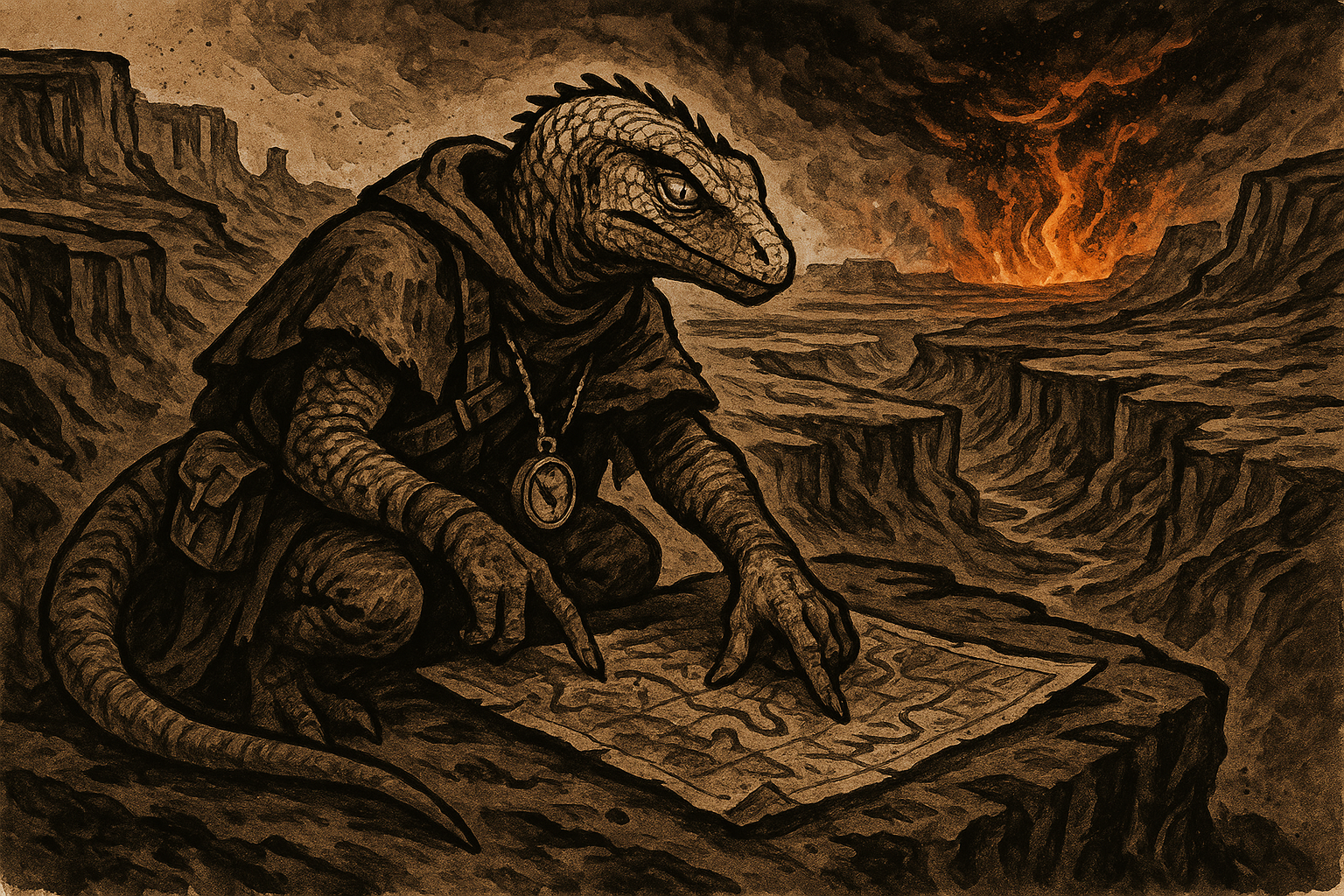
Rest and Recovery
Rule: This is not a variant rule. This is the default rest system. Short rests take 8 hours. Long rests take 1 week in a safe settlement.
In the harsh post-apocalyptic wasteland, recovery is slow and dangerous.
Short Rest: 8 Hours
Requirements:
- Minimum 8 hours of rest (sleep or light activity)
- Safe or defensible location
- Adequate shelter from elements
- Access to water
Benefits:
- Recover Hit Dice equal to half your level (minimum 1)
- Spend recovered Hit Dice to heal (roll each die + END modifier)
- Regain all 'per short rest' abilities
- Regain 1 spell slot of 3rd level or lower
- Remove 1 Burnout Point
- Remove Exhaustion level 1-2 (if at level 1-2 only; levels 3+ require a Long Rest)
- Maximum 1 short rest per 24-hour period
Limitations:
- Cannot benefit from multiple short rests in same 24-hour period
- Interrupted rest (combat, environmental hazard) must restart
- No spell slot recovery beyond 1 slot
GM Note: The Dungeon Breather is an optional variant for dungeons where an 8-hour rest would break pacing. Use sparingly — 1-2 per dungeon maximum.
Dungeon "Breather" Variant:
- GMs may place "safe rooms" in dungeons/hostile areas
- These allow 1-hour rest that counts as short rest (reduced benefits)
- Only recover 1 HD, no spell slots
- Prevents total party wipes in long dungeons
Long Rest: 7 Days (1 Week)
Requirements:
- Minimum 7 consecutive days in safe settlement
- Access to food, water, shelter
- No strenuous activity (light work allowed, no combat/adventuring)
- Medical care or healing magic available (recommended)
Benefits:
- Full HP recovery
- All Hit Dice recovered
- All spell slots recovered
- All limited-use abilities recovered
- Remove all Burnout Points
- Remove all Exhaustion levels
- Remove conditions that explicitly end after a long rest (see Conditions & Status Effects — Poisoned and Diseased are NOT auto-cleared; they follow their own rules)
- Heal one Lingering Injury (if medical treatment available)
Limitations:
- Exhaustion 5-6 requires 2 weeks to remove fully (1 week removes 2 levels)
- Permanent injuries may not heal
- Must actually be in safe location (GM discretion)
Interrupted Long Rest:
- If adventuring/combat occurs during rest week, all progress lost
- Must restart 7-day count
Natural Healing (No Rest)
Daily Recovery (No Combat):
- Regain END modifier HP per day of light activity (minimum 1)
- Requires adequate food and water
- Slow but doesn't require full rest week
Warning: Without water in hot climates, a character gains 1 Exhaustion after 1 day, then 2 per day. Death occurs in 3-4 days. Finding water stops the gain but doesn't remove existing Exhaustion levels.
Starvation/Dehydration:
- 3 days without food: Gain 1 Exhaustion, then 1 per day
- 1 day without water: Gain 1 Exhaustion, then 1 per day (2 per day in hot climate)
- Food/water immediately stops Exhaustion gain but doesn't remove levels
Lingering Injuries
When you drop to 0 HP or take damage equal to or greater than half your max HP in one hit, roll on this table (GM discretion).
Lingering Injury Roll: d100
| d100 | Injury | Effect | Healing |
|---|---|---|---|
| 01-05 | Minor Scar | Cosmetic only | Permanent |
| 06-10 | Limp | Speed -5 feet | 1 week rest + DC 15 Medicine |
| 11-15 | Persistent Pain | Disadvantage on END saves | 1 week rest + DC 15 Medicine |
| 16-20 | Cracked Ribs | Disadvantage on MIG checks | 2 weeks rest + DC 15 Medicine |
| 21-25 | Concussion | Disadvantage on INT checks | 1 week rest + DC 15 Medicine |
| 26-30 | Broken Arm | Cannot use arm, drop held item | 4 weeks rest + DC 20 Medicine OR 3rd-level healing spell |
| 31-35 | Broken Leg | Speed reduced to 10 feet, disadvantage on AGI saves | 4 weeks rest + DC 20 Medicine OR 3rd-level healing spell |
| 36-40 | Internal Bleeding | Lose 1 HP per hour until treated | DC 15 Medicine check stops bleeding |
| 41-45 | Punctured Lung | Disadvantage on END checks, can't hold breath | 2 weeks rest + DC 20 Medicine OR 4th-level healing spell |
| 46-50 | Fractured Skull | Disadvantage on INT/WIS checks | 4 weeks rest + DC 20 Medicine OR 4th-level healing spell |
| 51-55 | Severed Finger/Toe | Minor penalty to fine manipulation | Permanent (5th-level Regeneration spell restores) |
| 56-60 | Mangled Hand | Cannot use hand for complex tasks | 6 weeks rest + DC 25 Medicine OR 5th-level healing spell |
| 61-65 | Shattered Knee | Speed reduced by 15 feet | 6 weeks rest + DC 25 Medicine OR 5th-level healing spell |
| 66-70 | Lost Eye | Disadvantage on Perception checks, ranged attacks beyond 30 feet | Permanent (augment or 6th-level Regeneration) |
| 71-75 | Collapsed Lung | Max HP reduced by 25% | 4 weeks rest + DC 25 Medicine OR 5th-level healing spell |
| 76-80 | Spinal Damage | Speed reduced by 20 feet, disadvantage on AGI saves/checks | 8 weeks rest + DC 25 Medicine OR 6th-level healing spell |
| 81-85 | Lost Hand | Cannot use hand | Permanent (augment or 6th-level Regeneration) |
| 86-90 | Lost Foot | Speed reduced to 15 feet, cannot Dash | Permanent (augment or 6th-level Regeneration) |
| 91-93 | Lost Arm | Cannot use arm | Permanent (augment or 7th-level Regeneration) |
| 94-96 | Lost Leg | Speed reduced to 10 feet, require crutches/wheelchair | Permanent (augment or 7th-level Regeneration) |
| 97-98 | Traumatic Brain Injury | -2 to INT or WIS (random) | Permanent (7th-level healing spell may restore) |
| 99 | Organ Failure | -4 to END, max HP reduced by 50% | Permanent (augment transplant or 7th-level spell) |
| 00 | Instant Death | Massive trauma, die instantly | Resurrection only |
Spell References: The table references "Regeneration" and high-level healing spells by minimum spell level. These are available to Mystics, Channelers, or characters with access to the appropriate spell level through the modular spell crafting system (see Magic). "Regeneration" refers to a healing spell crafted using the Vitae cantrip at the listed spell level — GMs should use the spell crafting rules to determine exact slot cost, Forms, and casting requirements.
GM Guidance:
- Roll only for dramatic/deadly encounters
- Lower rolls (01-50) for minor defeats
- Higher rolls (51-00) for near-death experiences
- Cybernetic/magical augments can replace lost limbs
Severity Modifier: When rolling on the Lingering Injury table, apply a modifier based on the severity of the blow that dropped you:
- Dropped from above 50% HP by a single hit: Roll normally
- Dropped from below 50% HP: Roll with -20 (shift toward milder results)
- Dropped by ongoing damage (poison, fire, bleeding): Roll with -30
- Massive damage (single hit dealt more than your max HP): Roll with +20
Partial Recovery: After completing half the listed recovery time, the injury's penalties are halved (round penalties down). For example, a Broken Arm (-4 to attacks with that arm, 4 weeks recovery) reduces to -2 after 2 weeks. The character can resume limited duty while continuing to heal.
Field Medicine and Non-Magical Healing
With magic scarce and long rests requiring a week, field medicine is critical.
Emergency Stabilization
Action: Stabilize Dying Creature
- Time: 1 action
- Range: Touch
- Skill: Medicine DC 10
- Effect: Success stabilizes creature at 0 HP (no more death saves)
- Failure: No effect, can try again
- Critical Failure (DC 5 or lower): Patient loses 1 death save
Field Surgery
Field Surgery (10 minutes): Requires a Medicine kit and a stable environment. Medicine check DC 15. Success: Restore 4d8 + WIS modifier HP. Failure: No HP restored, 1 use of kit expended. Once per character per 24 hours.
Long-Term Care
Downtime: Intensive Medical Treatment
- Time: 1 week (during long rest)
- Skill: Medicine DC varies by injury
- Effect:
- Heal lingering injuries (see table above)
- Double HP recovery rate during rest
- Remove disease/infection
- Prevent injury complications
Costs:
- Medical supplies (Tier 2-3, 50-300 credits depending on injury severity)
- Access to medical facility or well-equipped camp
Stims (Technology Healing)
Use: 1 action. Range: Self or adjacent ally.
| Stim | Effect | Cost |
|---|---|---|
| Tier 1 Basic Stim | Restore 1d8+2 HP | 25 credits |
| Tier 2 Combat Stim | Restore 2d8+2 HP | 75 credits |
| Tier 3 Advanced Stim | Restore 3d8+2 HP + remove 1 condition | 200 credits |
A character can benefit from a maximum of 2 stims per 24-hour period. A 3rd stim has no healing effect and requires a Fortitude save (DC 15) or gain 1 level of Exhaustion from chemical overload.
Exhaustion in Harsh Environments
Exhaustion is more dangerous and easier to gain in the wasteland. For the full exhaustion track (6 levels, from Fatigued to Death) and recovery rules, see Conditions & Status Effects — Exhaustion System.
Environmental Hazards
The wasteland presents constant environmental threats. Each source below lists when a Fortitude save is required and the consequence of failure. All DCs match the canonical values in Conditions & Status Effects — Gaining Exhaustion.
| Hazard | Fortitude DC | Frequency | Effect on Failure |
|---|---|---|---|
| Harsh Heat/Cold (2+ hours) | DC 12 | Every hour | Gain 1 Exhaustion level |
| Extreme Heat/Cold (2+ hours) | DC 16 | Every hour | Gain 1 Exhaustion level |
| High Altitude | DC 15 | Every day | Gain 1 Exhaustion level |
| Toxic Atmosphere | DC varies | Typically every hour | Gain 1 Exhaustion level |
| Radiation Zone | See Irradiated condition | See source intensity | Gain Irradiated levels (Level 3+ causes Exhaustion; see Conditions — Radiation) |
Temperature guidance: Harsh conditions include desert days, mountain winters, and irradiated hot zones at the edge of contaminated regions. Extreme conditions include deep desert at midday, blizzards, volcanic proximity, and the interior of sealed pre-Fall facilities with failed climate control.
Radiation zones are not direct exhaustion sources — they inflict the Irradiated condition, which causes exhaustion at Level 3+ (1/day) and Level 4 (1/12 hours). The Fortitude save DC and exposure rate depend on the radiation source's intensity (Mild DC 12 to Extreme DC 22). See Conditions & Status Effects — Radiation for the full intensity table, protection items, and treatment options.
Activity Sources
- Forced March (beyond 8 hours): Fortitude save DC 10 + (hours beyond 8) per hour or gain 1 level
- Swimming/Climbing (extended): Fortitude save DC 15 every 30 minutes or gain 1 level
- Sprinting (10+ minutes): Gain 1 level automatically
Deprivation
- 24 hours without sleep: Gain 1 level, then 1 level per additional 24 hours
- 3 days without food: Gain 1 level, then 1 per day
- 1 day without water: Gain 1 level, then 1 per day (2 per day in heat)
Combat and Ability Sources
- Sandevistan augment use: Gain 1 level after effect ends
- Critical Burnout (9+ BP): Gain 1 level
- Resurrection magic: Gain 3 levels automatically
Removal (Gritty Rules)
- Short Rest (8 hours): Remove 1 level of Exhaustion if at level 1-2 only; levels 3+ require a Long Rest
- Long Rest (7 days): Remove all levels of Exhaustion
- Greater Restoration (5th-level spell): Remove 1 level instantly
For the full recovery table, see Conditions & Status Effects — Removing Exhaustion.
Stress
In the old world, you could see a counselor, take medication, take a vacation. Those options are gone. Fifty years of survival in the Ashfall means most people carry wounds that never had names, let alone treatment.
Physical injuries heal. The Exhaustion track measures your body breaking down. But Ashfall also measures what it costs you psychologically to witness atrocity, lose people you care about, make impossible choices, and survive things that shouldn't be survivable.
Stress is not a punishment. It is a storytelling tool — one that makes survival matter, creates roleplay hooks, and gives the Medic a new role at the table. It is intentionally lightweight. Most sessions will not trigger a Stress Check. When Stress does appear, it marks a moment that mattered.
The Stress Track
Each character has a Stress track from 0 to 5. Track this alongside HP and Exhaustion.
| Stress Points | State | Effect |
|---|---|---|
| 0 | Steady | No effect |
| 1–2 | Stressed | No mechanical penalty — roleplay hooks only |
| 3–4 | Strained | Minor social mechanic (see below) |
| 5 | Traumatized | Gain the Traumatized condition (see Conditions) |
Gaining Stress
When a character experiences a defined Stress Event, the GM may call for a Stress Check: a Will save at the listed DC. On a failed save, gain 1 Stress Point. On a success, the character holds it together — for now.
Stress Checks are not routine. GMs should call for them sparingly — major narrative moments, not every combat. The table below defines valid triggers; ad-hoc triggers outside this list require GM discretion.
| Stress Event | DC | Notes |
|---|---|---|
| Witnessing the death of a bonded ally | 12 | Only if the character has established a bond with them — NPC friends, party members, loved ones |
| Witnessing a civilian atrocity | 10 | Massacre, torture, destruction of a community — events that show the wasteland at its worst |
| Failing to protect someone the PC swore to protect | 14 | Player must have established the oath (at character creation, in roleplay, or as a downtime activity) |
| Extended isolation (48+ hours alone, no contact) | 8 | Wasteland solitude without human contact — the silence has weight |
| A personally significant backstory trigger | 12 | Background-specific trauma (GM and player define at Session Zero) |
| A morally impossible choice with no right answer | 16 | A genuine Sophie's Choice — both options have irreversible cost. GMs should use this sparingly |
| Reduced to 0 HP for the first time | 8 | The first brush with near-death. Only applies once — the character has already learned what that edge feels like after the first time |
GM Guidance on Sparing Use: If you're calling Stress Checks every session, you're using the system wrong. Stress should emerge 2–4 times across a full campaign arc — at points where the narrative is asking for weight. See the GM sidebar in Game-Mastering — Stress Events: When to Call for a Check.
Stress Effects
SP 1–2 — Stressed: No mechanical effect. The character is carrying something. GMs should introduce subtle signs in NPC interactions and scene-setting: the character wakes up looking like they didn't sleep well, is short-tempered at a checkpoint, pauses too long before a door that looks like the door from the last village. These are roleplay notes, not rules.
SP 3–4 — Strained: Once per session, when this character attempts to convince someone they are "fine" through Deception or Persuasion, the GM may (not must) call for an additional Will save (DC 10). On failure, the character's emotional state bleeds through regardless of the Deception/Persuasion result — the NPC notices something wrong. This is a narrative moment, not a hard block. It should happen in scenes where it would be interesting, not as a weapon against the player.
SP 5 — Traumatized: Gain the Traumatized condition (see Conditions & Status Effects — Traumatized). The Traumatized condition cannot be removed by rest alone — only by resolution, downtime, or a Medic's intervention (see Recovery below).
Recovering Stress
SP 1–4 (Stressed or Strained): A Long Rest (7 days in a safe settlement, per the rest rules in Exploration) reduces Stress by 2 points. The rest, the connections, the relative safety — it matters.
The settlement must feel genuinely safe — a heavily fortified ruin or makeshift camp may provide physical shelter but not the human connection that heals Stress. GM discretion on whether a specific location qualifies.
SP 5 (Traumatized): Rest does not reduce the Traumatized condition. Resolution requires one of:
- Completing a narrative arc related to the trauma source — the character confronts, resolves, or integrates the experience in a meaningful way (GM judgment on what counts; should be a session highlight, not a check).
- Seeking Counsel downtime activity (see Downtime — Personal Recovery).
- Medic's Psychological First Aid (see below).
After the Traumatized condition is removed, the character's Stress returns to 3 — the trauma doesn't vanish, it becomes something they can carry.
Medic Integration
A Medic with the Field Surgeon or Pharmacist specialization can provide Psychological First Aid during a Long Rest camp.
Spend approximately 1 hour during a Long Rest camp in quiet conversation with a companion in need. Make a Medicine check:
- DC 12 for a character at SP 1–4: on success, reduce their Stress by 1.
- DC 16 for a character with the Traumatized condition (SP 5): on success, remove the Traumatized condition and reduce their Stress to 3.
This is not a cure — it is what a unit medic actually does: helps someone process what just happened, reminds them they're still here, and makes the next few days survivable.
Optional Rule: Named Trauma Conditions
This section is an optional variant for tables that want deeper psychological consequence. Discuss at Session Zero before using.
When a character reaches SP 5 for the second time (they were Traumatized, recovered, and reached SP 5 again), rather than simply gaining the Traumatized condition again, they may choose a Named Trauma Condition. This condition is permanent — it changes the character, not just their current state.
Named Trauma Conditions are not punishments. They reflect how extreme experience reshapes a person, and each one comes with both a cost and a strength.
| Condition | Effect | Strength |
|---|---|---|
| Cold | Disadvantage on Persuasion checks that require emotional warmth or empathy | Advantage on Will saves against fear, intimidation, and emotional manipulation |
| Haunted | Disadvantage on Passive Perception during the first round of any ambush (old ghosts get in the way) | Advantage on Perception to detect hidden threats you've seen before — the wasteland has a familiar shape now |
| Reckless | At the start of each combat, must succeed on a Will save (DC 8) or spend their first action attacking rather than preparing | +1d6 damage on attack rolls made on the first round of any combat — nothing focuses like not caring whether you survive |
| Suspicious | Disadvantage on Insight checks to judge whether someone is trustworthy; assumes the worst | Advantage on Deception checks to spot other people's deception — you know exactly what lying looks like |
| Driven | 1/session: must pursue a personal obsession even at GM discretion when it would be unwise | When directly pursuing the obsession that defines this Trauma, advantage on all checks related to it |
| Disconnected | Social encounters with new NPCs start at one step lower Disposition (Hostile instead of Neutral, etc.) | Immune to Charmed condition and magical compulsion effects that function through emotional appeal |
Named Trauma Conditions cannot be removed by rest, Seeking Counsel, or Medic intervention. They are permanent character traits. They can be explored through narrative — a Haunted character might eventually make peace with what haunts them — but the mechanical effect remains unless a GM rules otherwise in response to extraordinary character work.
Design note: Named Trauma Conditions borrow from Blades in the Dark's Trauma system, which is excellent. In that system, filling your trauma track ends the character. Ashfall's version is gentler: a Named Condition is a scar, not a death sentence. Some of the most interesting long-running characters are the ones shaped by what they've survived.
Overland Travel
When the party travels overland, the GM divides each day into two travel segments of roughly 4 hours each (matching the existing exploration activity framework). During each segment, characters choose one exploration activity (see Exploration Activities). The party travels as a group — everyone moves at the same pace.
Travel Pace
The party chooses a pace at the start of each day. Pace can be changed between segments but not mid-segment.
| Pace | Distance/Day | Effect |
|---|---|---|
| Cautious | 15 miles | Advantage on Navigate and Scout Ahead checks. Can Forage while traveling (counts as exploration activity). -5 to Passive Perception of hostile creatures attempting to spot the party. |
| Normal | 25 miles | Standard travel. One exploration activity per segment (4 hours). |
| Fast | 35 miles | Disadvantage on Navigate and Perception checks. Cannot Forage or Scout Ahead. -5 to the party's Passive Perception (enemies spot you more easily). |
| Forced March | 40+ miles | After 8 hours of travel, Fortitude save DC 10 + (hours beyond 8) per hour or gain 1 level of Exhaustion. Cannot take exploration activities beyond hour 8. See Exhaustion — Activity Sources for the full rule. |
Mounted travel: Characters on mounts or in vehicles increase distance by 50% (Cautious: 22 miles, Normal: 37 miles, Fast: 52 miles). Forced March rules apply to the mount's Fortitude save, not the rider's. See Vehicles for motorized travel.
Carrying capacity: The party's pace is limited by its slowest loaded member. If any character exceeds their carrying capacity, the party's speed modifier is reduced by one step (Fast → Normal → Cautious). Pack animals and vehicles solve this — see Equipment for carrying capacity rules.
Terrain Modifiers
Terrain affects travel speed and navigation difficulty. Apply the speed modifier to the pace's listed distance.
| Terrain | Speed Modifier | Navigation DC | Notes |
|---|---|---|---|
| Road or Trail | ×1 | DC 8 | Reliable but exposed. +2 to encounter chance (patrols, traders, ambushes on known routes). |
| Open Wasteland | ×0.75 | DC 12 | Standard post-Fall terrain. Minimal cover. Full weather exposure. |
| Dense Ruins | ×0.5 | DC 14 | Cover available. Ambush risk from both sides. Scavenging opportunities (see Scavenge activity). |
| Thornwall Basin | ×0.5 | DC 16 | Difficult terrain — aggressive mutated flora. Mild radiation from bioluminescent plants (Fortitude DC 12, 1 check per segment). Cutting a path requires MIG checks (DC 14) or machete/energy weapon. |
| Crucible Glass Fields | ×0.5 | DC 15 | Radiation zones (Moderate intensity — see Conditions — Radiation). Fragile surface: AGI save DC 12 or fall through into subsurface cavities (2d6 falling damage). Navigation by landmarks nearly impossible — everything looks the same. |
| Mountains / Cliffs | ×0.33 | DC 16 | Climbing checks required for vertical sections (Athletics DC 14). Altitude: above 10,000 ft, Fortitude DC 15 per day or gain 1 Exhaustion from thin air. |
| Voidscar Proximity | ×0.5 | DC 18 | Reality distortion. Navigate checks at disadvantage. The GM creates reality distortions appropriate to the Voidscar — gravity reversal, time dilation, phantom sounds, or spatial loops. A future supplement will formalize a Voidscar Anomaly table. Compasses and electronic navigation fail. |
Example: A party at Normal pace (25 miles/day) traveling through Open Wasteland covers 25 × 0.75 = 18.75 miles. Through Dense Ruins: 25 × 0.5 = 12.5 miles.
GM Tip: Don't force a Navigation check for every segment on a known road. Reserve checks for unfamiliar terrain, poor visibility, or when the party is actively lost. Getting lost adds 1d4 hours per failed check.
Getting Lost
When a Navigation check fails:
- Fail by less than 5: The party arrives at their destination but the journey takes 1d4 extra hours.
- Fail by 5-9: The party is off course — they arrive at a location 1d6 miles from their intended destination in a random direction. They must re-navigate.
- Fail by 10+: The party is lost. They don't realize it for 1d4 hours. All subsequent Navigate checks are at disadvantage until they find a recognizable landmark or succeed on a Navigate check by 5+.
Exploration Activities
During overland travel or dungeon exploration, characters can perform exploration activities that leverage their strengths. Each character chooses one activity during a travel segment (typically 4 hours).
Physical Activities (MIG/END)
- Force Path (MIG): Clear debris, break through barricades, or force open sealed doors. MIG check DC varies (15 for jammed doors, 20 for collapsed rubble, 25 for reinforced barriers). Success clears a path; failure may cause noise (alerting enemies) or collapse (1d6 bludgeoning to adjacent creatures).
- Carry the Load (MIG): Carry extra supplies for the party. You can carry an additional 50 lbs beyond your normal limit without penalty. Allies within the group effectively gain +50 lbs carrying capacity distributed among them.
- Fortify Camp (MIG/END): Spend 1 hour reinforcing a rest site. MIG check DC 12. Success grants the party +2 to initiative if ambushed during rest and partial cover from one direction.
- Scout Ahead — Physical (END): Jog ahead of the party to check for physical hazards. END check DC 13. Success spots hazardous terrain, unstable structures, or natural dangers before the party encounters them.
Mental Activities (INT/WIS)
- Navigate (WIS): Guide the party through unfamiliar terrain. WIS (Survival) check DC varies by terrain difficulty. Success avoids getting lost; failure adds 1d4 hours to travel time.
- Forage (WIS): Search for food, water, and useful materials. WIS (Survival) check with DC and yield based on terrain:
- Temperate (DC 12): 1d4 rations + water (1 day's supply) on success
- Wasteland (DC 16): 1d3 rations + water (1 day's supply) on success
- Desolate (DC 20): 1d2 rations on success (no water found unless success by 5+)
- Any terrain: Success by 5+ yields an extra 1d2 rations, or identifies medicinal herbs, or locates a reliable water source (forager's choice).
- Cannot Forage and Scavenge in the same segment.
- Contaminated zones: Water found in or near radiation zones may be irradiated. The GM may require a Fortitude save at the zone's radiation intensity DC when consuming unfiltered water (see Conditions — Radiation: Ingested or Injected Radiation). A successful Survival check (DC 14) or use of Water Purification Tablets (25 cr) or a Portable Water Purifier (150 cr) identifies contamination before consumption.
- Identify Hazards (INT): Analyze the environment for technological or magical dangers. INT (Technology or Arcana) check DC 15. Success reveals traps, radiation zones, or magical anomalies.
- Map the Route (INT): Create a detailed map of the area. INT (Navigation) check DC 12. Success grants advantage on future Navigation checks in this area and reveals points of interest.
- Scavenge (WIS): Search for useful equipment, components, and salvage in ruins, junkyards, or battlefields. Requires proficiency in the Scavenging advanced skill (see Advanced Skills — Scavenging). Scavenging check with DC based on location quality:
- Picked-over outskirts (DC 14): 1d4 Salvage on success
- Sealed interior / untouched ruin (DC 16): 1d4 Salvage + 1 Tech on success
- Deep vault / pre-war facility (DC 18): 2d4 Salvage + 2 Tech on success
- Any location: Success by 5+ also yields a random Tier 1 item (GM's choice from equipment tables) or a data core worth 1 Tech capital
- Scavenging during travel takes 1 hour of focused searching per attempt. One attempt per travel segment (4 hours). Cannot Scavenge and Forage in the same segment.
- The Scavenger build's Salvage Dice apply to Scavenging checks made during exploration, per their Scrounger's Instinct feature.
Social Activities (PRE)
- Gather Information (PRE): When passing through or near settlements, make Persuasion or Streetwise checks to learn about local threats, resources, or rumors.
- Maintain Morale (PRE): Keep the party's spirits up during long, grueling travel. PRE check DC 12. Success grants all allies advantage on their next Exhaustion-related Fortitude save.
- Negotiate Passage (PRE): DC varies. Talk your way through hostile territory, toll checkpoints, or faction borders without violence. On success, the party passes safely. Proficiency in Persuasion or Deception required.
- Inspire the March (PRE): DC 14. Boost party morale during forced marches. On success, the party ignores the first hour of forced march penalties. 1/day.
- Gather Intelligence (PRE/INT): DC 14. When near settlements, spend 1 hour gathering rumors, maps, and information about upcoming terrain or threats. On success, the party gains advantage on their next Navigation or Perception check.
Combat-Adjacent Activities (AGI/MIG/INT)
- Scout Ahead (AGI): DC varies by terrain. Move ahead of the party to spot threats. On success, the party cannot be surprised for the next 4 hours. On failure, you risk encountering the threat alone. Proficiency in Stealth required.
- Fortify Camp (MIG/INT): DC 14. Spend 1 hour setting up defenses (trip wires, barricades, lookout positions). Enemies attacking the camp have disadvantage on their first round. Proficiency in Survival or Technology required.
Ruin Hazards
A century of decay turns every building into a deathtrap. The ceiling sags. The air tastes wrong. Something behind the wall is still humming. The question isn't whether the ruin is dangerous --- it's which kind of dangerous.
Pre-Fall infrastructure --- factories, military installations, hospitals, data centers, residential towers, transit tunnels --- dominates the wasteland landscape. Most of it is collapsing. Some of it is actively hostile. Characters who enter ruins face hazards that test different skills, punish carelessness, and reward preparation.
How Ruin Hazards Work
Detection: Each hazard can be spotted before it triggers. The detecting character makes a skill check (specified per hazard) against the hazard's Detection DC. Success means the character identifies the hazard and can warn the party. Detection happens passively Passive or actively (a character spending time to search, using the Identify Hazards exploration activity).
Avoidance: Once detected, the party can attempt to avoid or neutralize the hazard. Each hazard lists at least two avoidance methods using different skills. The party chooses which method to attempt. Avoidance requires an active check --- passive scores don't apply.
Failure: If a hazard is not detected, or if an avoidance attempt fails, the hazard triggers. Consequences are listed per hazard: damage, condition application, or complications (blocked paths, resource loss, noise attracting enemies).
Augmentation Interactions: Certain augmentations bypass or mitigate specific hazards. These are noted under each hazard where applicable.
Hazard Density
Not every ruin is equally dangerous. The GM sets a Hazard Density for each ruin based on its age, condition, and original purpose.
| Density | Hazards per Exploration Segment | Typical Ruin | GM Guidance |
|---|---|---|---|
| Light | 1 hazard per 2 segments | Recently abandoned settlement, maintained outpost | Low tension --- used for flavor and resource drain on long delves |
| Moderate | 1-2 hazards per segment | Pre-Fall commercial building, collapsed residential block | Standard dungeon exploration --- balanced risk/reward |
| Heavy | 2-3 hazards per segment | Military installation, industrial facility, underground complex | High tension --- parties should prepare heavily and expect attrition |
| Extreme | 3+ hazards per segment | Reactor site, bioweapon lab, deep-ruin lowest levels | Lethal environment --- short expeditions only, full party coordination required |
An exploration segment is approximately 30 minutes of in-game time spent actively moving through and investigating a ruin. A 4-hour dungeon delve is roughly 8 segments, though combat, rest stops, and backtracking alter the pace.
GM Tip: Roll or choose hazards from the table below. Vary the types --- three Structural Collapses in a row is boring. Mix physical, environmental, and technological hazards to give different party members their moment. If the party has a Scavenger, let their Salvage Die apply to hazard detection where the GM deems appropriate. For Extreme density or high-tier ruins, the GM may increase security system attack bonuses to +8 or +10 and damage to 3d8.
Hazard Types
1. Structural Collapse
The ceiling groans. Dust sifts down in thin streams. A support beam shifts two inches to the left and stops. For now.
- Detection: Perception DC 14 or Survival DC 13 (reading structural stress signs --- cracks, sagging, dust patterns)
- Avoidance (choose one):
- Athletics DC 15: Shore up the passage --- brace supports, wedge debris, reinforce the weak point. Takes 10 minutes. Success stabilizes the area for 1 hour (safe for the party to pass and return).
- Acrobatics DC 14: Dash through the danger zone before it gives way. Each creature must make the check individually. Takes 1 round per creature.
- Technology DC 16: Identify the load-bearing failure point and redirect collapse away from the party's path. Takes 5 minutes. Requires a basic toolkit.
- Failure: The area collapses. Creatures in the danger zone (10-foot radius) take 3d6 bludgeoning damage (Reflex save DC 14 for half). Creatures that fail the save by 5 or more are Buried (see Conditions). The passage is blocked --- clearing it takes 1 hour and an Athletics DC 15 check (or 30 minutes with appropriate tools).
- Augmentation: Characters with Skeletal Reinforcement augmentations have advantage on the Reflex save.
2. Toxic Atmosphere
The air changes three steps past the doorway. Something chemical --- sweet and metallic. Your eyes water before your brain catches up.
- Detection: Survival DC 13 (smell, air movement, dead insects/animals near the threshold) or Science DC 12 (recognizing chemical signatures)
- Avoidance (choose one):
- Fortitude save DC 14: Hold your breath and push through quickly. Each creature makes one save per hazard zone (typically one room or corridor section, 50-100 feet). Failure means you inhaled.
- Technology DC 14: Seal the area or ventilate it. Requires 10 minutes and a basic toolkit. Success clears the atmosphere for 30 minutes.
- Survival DC 15: Improvise a breathing filter from available materials (cloth, charcoal, water). Takes 5 minutes. Grants advantage on the Fortitude save for 1 hour.
- Failure: The creature is Poisoned for 1 hour (disadvantage on attacks and ability checks). If the creature remains in the toxic area for more than 10 minutes without protection, they also begin Suffocating (see Conditions).
- Augmentation: Characters with a Rebreather augmentation are immune to this hazard. Characters with Toxin Filters (internal augmentation) have advantage on the Fortitude save and reduce the Poisoned duration to 10 minutes.
3. Live Wiring
The wall panel is open. Behind it, a nest of cables --- some dark, some still carrying current from a generator or battery bank that hasn't died in nearly a century. The floor is wet.
- Detection: Technology DC 14 (recognizing active power lines, hearing the hum) or Perception DC 16 (spotting the glow, feeling static charge)
- Avoidance (choose one):
- Technology DC 15: Identify the circuit and cut power safely. Takes 5 minutes. Requires a basic toolkit. Success de-energizes the area permanently.
- Acrobatics DC 14: Navigate around the live cables without touching them. Each creature must check individually.
- Science DC 13: Ground the current safely using available conductive materials. Takes 5 minutes. Requires metal objects or scrap (1 Salvage capital consumed).
- Failure: The creature takes 2d6 electric damage and must make a Fortitude save DC 13 or be Dazed for 1 round (actions or movement, not both; no reactions). If the floor is wet, all creatures within 10 feet must also make a Reflex save DC 12 or take 1d6 electric damage.
- Augmentation: Characters with EMP Hardening or Insulated Plating augmentations take half electric damage from this hazard.
4. Unstable Flooring
The tiles look fine. The subfloor beneath them is rotten plascrete over a three-story drop. You find out when someone steps on the wrong square.
- Detection: Investigation DC 14 (probing the floor, noticing discoloration, tapping for hollow sounds) or Perception DC 15 (seeing the slight bow in the surface)
- Avoidance (choose one):
- Acrobatics DC 13: Distribute your weight and cross carefully. Each creature checks individually. Creatures in heavy armor make the check at disadvantage.
- Athletics DC 14: Jump across the unstable section (requires a running start, max 15 feet).
- Technology DC 15: Bridge the gap with available materials (planks, scrap metal, cable). Takes 10 minutes. Creates a stable crossing for the party.
- Failure: The floor gives way. The creature falls 1d4 x 10 feet (1d6 bludgeoning per 10 feet fallen, Acrobatics DC 15 to halve). The creature lands in the level below --- potentially in a different hazard zone. Climbing back up requires Athletics DC 13 and 10 minutes (or a rope, which bypasses the check).
5. Radiation Pocket
The Geiger counter spikes. Not the slow tick of background radiation --- the angry clicking that means you've walked into a hot zone.
- Detection: Technology DC 12 (radiation scanner or Geiger counter --- if the character has one, detection is automatic with no check required) or Science DC 14 (recognizing the visual markers --- discolored walls, crystallized dust, absence of any organic life)
- Avoidance (choose one):
- Navigation DC 13: Find an alternate route around the irradiated area. Takes 30 minutes of backtracking and pathfinding.
- Fortitude save DC 15: Push through quickly, limiting exposure. Each creature saves once. This does not prevent all exposure --- it reduces the effective intensity by one step (e.g., Moderate becomes Mild).
- Technology DC 16: Locate and shut down the radiation source (exposed fuel rod, cracked containment vessel, irradiated material). Takes 10 minutes. Requires a basic toolkit and radiation-rated equipment (lead-lined gloves, tongs, shielded container --- 50 cr total or improvised from 2 Salvage). Success eliminates the hazard permanently.
- Failure: The creature is exposed to radiation at the pocket's intensity level (typically Moderate --- Fortitude DC 15 every 10 minutes). Apply the Irradiated condition as described in Conditions. Irradiated creatures continue accumulating radiation levels until they leave the area and receive treatment.
- Augmentation: Characters with Radiation Shielding augmentation reduce effective radiation intensity by one step (Moderate becomes Mild, Mild becomes negligible).
GM Tip: Radiation Pockets are the long-game hazard. They don't hurt immediately like a collapse or a live wire --- they accumulate. A party that pushes through two Radiation Pockets in one delve may be fine today and sick tomorrow. Use them to pressure the party's timeline, not their hit points.
6. Automated Security
The turret tracks left, pauses, tracks right. Its targeting laser sweeps the corridor in a predictable pattern. The pattern hasn't changed in a hundred years. Neither has the ammunition feed.
- Detection: Technology DC 15 (identifying active security systems, cameras, sensor grids) or Perception DC 14 (spotting the hardware --- lenses, barrel housings, motion sensor modules)
- Avoidance (choose one):
- Technology DC 16: Hack or disable the system. Takes 5 minutes. Requires a basic toolkit. Characters with the Hacking advanced skill gain +2 to this check and can attempt it in 1 minute. Success shuts down the system permanently (or until someone reactivates it).
- Acrobatics DC 15: Time the patrol pattern and slip through the sensor gap. Each creature checks individually. Creatures in heavy armor or carrying bulky equipment make the check at disadvantage.
- Athletics DC 18: Brute force --- smash the system before it fires. Requires melee range. The system gets one attack before you reach it (see Failure).
- Failure: The security system activates. Effect depends on the system type (GM's choice):
- Turret: Ranged attack +6, 2d8 piercing damage. Fires once per round at the nearest detected creature until disabled or destroyed (DV 14, HP 15, immune to poison and psychic).
- Shock Grid: All creatures in a 15-foot area take 2d6 electric damage (Reflex save DC 14 for half). Recharges every 2 rounds.
- Lockdown: Blast doors seal. The party is trapped in the current section until the system is overridden (Technology DC 18, 10 minutes) or the doors are forced (Athletics DC 22 or Hardness 15, HP 30).
- Alarm: No immediate damage. Alerts all hostile creatures within the ruin. The GM determines the response (patrol arrives in 1d4 rounds, ambush is set, or exit routes are blocked).
7. Flooded Section
The water starts at ankle depth. Twenty feet in, it's waist-high. The corridor slopes down. The lights don't work in here. Something brushed your leg.
- Detection: Perception DC 11 (water is usually obvious) or Survival DC 13 (assessing depth, current, and whether the water is safe --- contamination, creatures, electrical hazards beneath the surface)
- Avoidance (choose one):
- Athletics DC 13: Wade or swim through. Each creature checks individually. Failure means the creature is swept by current or loses footing --- see Failure. Creatures in heavy armor make this check at disadvantage.
- Investigation DC 15: Find a dry alternate route (service tunnels, upper floor access, ventilation shafts). Takes 15 minutes of searching.
- Technology DC 14: Locate and activate a drainage system (pumps, valves, sluice gates). Takes 10 minutes. Success drains the area to ankle depth, making passage safe. Requires a basic toolkit.
- Failure: The creature is submerged. Take 1d6 bludgeoning damage from debris and current. All carried items with the Electronic tag must make a durability check (roll 1d20: on a 1-5, the item loses 1 DP from water damage). If the water is deeper than 10 feet, the creature must hold their breath or begin Suffocating (see Conditions). Contaminated water also applies the Poisoned condition for 1 hour (Fortitude save DC 13 negates).
- Augmentation: Characters with Aquatic Adaptation augmentations can breathe underwater and have advantage on Athletics checks to swim. Characters with a Rebreather are immune to the Suffocating risk.
GM Tip: Flooded sections are excellent combination hazards. A flooded corridor with Live Wiring beneath the surface is lethal. A flooded area leading to a Radiation Pocket means contaminated water carries irradiated material. Layer hazards for high-density ruins.
8. Thermal Extremes
The door is warm to the touch. Not "heated room" warm --- "active furnace" warm. Whatever's behind this door, the temperature hasn't dropped in a lifetime. Someone left something running.
This covers both extreme heat (active furnaces, geothermal vents, reactor waste heat) and extreme cold (cryo-storage breaches, ruptured coolant lines, frozen deep-level facilities).
- Detection: Perception DC 12 (feeling temperature change through walls, seeing frost or heat shimmer) or Science DC 14 (identifying the heat/cold source and estimating exposure risk)
- Avoidance (choose one):
- Fortitude save DC 14: Push through quickly, minimizing exposure. Each creature saves once per room/corridor of extreme temperature. Takes 1 round per 30 feet of traversal.
- Survival DC 14: Insulate the party using available materials (thermal blankets, scavenged insulation, wet cloth for heat or layered materials for cold). Takes 10 minutes. Success grants the party advantage on Fortitude saves against this hazard for 1 hour.
- Technology DC 15: Locate and shut down the heat/cold source, or reroute climate systems to normalize the area. Takes 10 minutes. Requires a basic toolkit.
- Failure (Heat): The creature takes 1d6 fire damage per round of exposure and must make a Fortitude save DC 14 each round or gain 1 level of Exhaustion. Flammable equipment may ignite (GM discretion --- roll 1d20 per flammable item, ignites on 1-3).
- Failure (Cold): The creature takes 1d6 cold damage per round of exposure and must make a Fortitude save DC 14 each round or gain 1 level of Exhaustion. Movement speed is halved while in the cold zone. Water-based consumables (potions, stims in liquid form) freeze and are unusable until thawed (10 minutes in normal temperature).
- Augmentation: Characters with Thermal Regulation augmentations are immune to the damage and Exhaustion from this hazard (they still feel the temperature but their body compensates). Characters with Dermal Plating reduce damage by 2 per round (minimum 0).
Hazard Quick Reference Table
| Hazard | Detect Skill | Detect DC | Avoid Skills | Avoid DC | Failure Consequence |
|---|---|---|---|---|---|
| Structural Collapse | Perception / Survival | 14 / 13 | Athletics / Acrobatics / Technology | 15 / 14 / 16 | 3d6 bludgeoning, Buried, path blocked |
| Toxic Atmosphere | Survival / Science | 13 / 12 | Fortitude / Technology / Survival | 14 / 14 / 15 | Poisoned 1hr, Suffocating if prolonged |
| Live Wiring | Technology / Perception | 14 / 16 | Technology / Acrobatics / Science | 15 / 14 / 13 | 2d6 electric, Dazed 1 round |
| Unstable Flooring | Investigation / Perception | 14 / 15 | Acrobatics / Athletics / Technology | 13 / 14 / 15 | Fall 1d4x10 ft, drop to lower level |
| Radiation Pocket | Technology / Science | 12 / 14 | Navigation / Fortitude / Technology | 13 / 15 / 16 | Irradiated condition (Moderate) |
| Automated Security | Technology / Perception | 15 / 14 | Technology / Acrobatics / Athletics | 16 / 15 / 18 | Turret/Shock Grid/Lockdown/Alarm |
| Flooded Section | Perception / Survival | 11 / 13 | Athletics / Investigation / Technology | 13 / 15 / 14 | 1d6 bludgeoning, equipment damage, Suffocating/Poisoned |
| Thermal Extremes | Perception / Science | 12 / 14 | Fortitude / Survival / Technology | 14 / 14 / 15 | 1d6 fire or cold/round, Exhaustion |
Combining Hazards
At Heavy and Extreme density, the GM should combine hazards to create compound dangers:
- Flooded + Live Wiring: The water conducts electricity. All creatures in the water when the wiring triggers take full electric damage (no Reflex save for distance --- the water is the conductor). A compound hazard requires detecting each component separately --- spotting the flood doesn't reveal the live wiring beneath.
- Structural Collapse + Toxic Atmosphere: The collapse ruptures sealed containers or pipes, releasing toxic gas into the area. Creatures must deal with the collapse AND the gas simultaneously.
- Radiation Pocket + Thermal Extremes: The radiation source is generating heat. Characters who push through take both radiation exposure and heat damage. Shutting down the heat source also reduces radiation intensity by one step.
- Unstable Flooring + Flooded Section: The floor collapses into a flooded lower level. Fall damage plus submersion.
Compound hazards should count as 2 hazards for Hazard Density purposes. A compound hazard requires detecting each component separately --- spotting one hazard does not reveal the other. The GM should always allow compound hazards to be detected --- surprising the party with an undetectable compound hazard is unfair.
Dungeon Breather Rooms
A ruin of Moderate density or higher should include breather rooms --- cleared areas where the party can catch their breath, reassess, and prepare for the next section. These are not mechanically safe (enemies may still be present), but they are hazard-free spaces.
Guideline: one breather room per 3-4 hazards encountered. The party should feel pressure to reach the next breather room, not dread that there's no safe space in the entire ruin.
Breather rooms are good locations for:
- Short narrative scenes (party discusses what they've found)
- Loot or information caches (reward for surviving the hazard gauntlet)
- Decision points (two paths forward, each with visible hazard indicators)
- NPC encounters (other scavengers, trapped survivors, hostile squatters)
Weather & Environmental Conditions
Weather in the wasteland is not flavor text — it is a resource tax. Bad weather consumes supplies, forces shelter decisions, and creates time pressure. The GM should roll or choose weather at the start of each travel day.
Daily Weather Table
Roll 1d8 or choose:
| Roll | Weather | Effect | Duration |
|---|---|---|---|
| 1-3 | Clear | No effect. Standard travel. | All day |
| 4 | Overcast / Fog | Visibility reduced to 100 ft. Disadvantage on Perception checks beyond 60 ft. Navigation DC +2. | 1d8 hours |
| 5 | Rain / Sleet | Ranged attacks beyond 60 ft at disadvantage. Tracking checks gain advantage (wet ground). Fire damage halved outdoors. Navigation DC +2. Unprotected rations may spoil (10% chance per day). | 2d4 hours |
| 6 | Dust Storm | Visibility 30 ft. All ranged attacks at disadvantage. Movement speed halved outdoors. Exposed characters take 1d4 damage per hour (no armor reduction — fine particles bypass protection). Must shelter or accept damage. | 1d4 hours |
| 7 | Radiation Storm | Moderate radiation intensity — Fortitude DC 15 every 10 minutes of exposure. Must shelter immediately. Standard radiation protection applies (Hazmat Suit, RadBlock). See Conditions — Radiation. | 1d4 hours |
| 8 | Extreme Event | GM chooses one: Blizzard (Fortitude DC 16/hour or gain Exhaustion from cold), Heat Wave (Fortitude DC 16/hour or gain Exhaustion from heat), Acid Rain (1d6 acid damage/hour, corrodes Tier 1 unprotected equipment on a d20 roll of 1-3), or Electrical Storm (lightning strike: each hour, every exposed creature rolls a d20 — on a 1, struck for 3d10 lightning damage, Reflex save DC 15 for half). | 2d4 hours |
Seasonal modifiers (optional): The GM may adjust the table based on region and season. In the Crucible, treat rolls of 4-5 as Dust Storms instead. Near the Voidscars, treat rolls of 7-8 as reality anomalies instead of weather. In Thornwall Basin, rain is more common — treat rolls of 1-2 as Rain.
Shelter Rules
Weather threatens those without protection. The quality of shelter determines how much a character is affected.
| Shelter Type | Setup | Effect |
|---|---|---|
| Adequate Shelter | Building, cave, or camp setup (Survival DC 12, 1 hour) | Negates all weather penalties. Required for short rest during Dust Storm or worse. |
| Partial Shelter | Tarp, lean-to, vehicle interior (Survival DC 8, 30 minutes) | Halves weather damage and penalties. Does not protect from radiation storms. Allows short rest in Rain/Fog. |
| No Shelter | — | Full weather effects apply. Cannot benefit from short rest if weather is Dust Storm or worse. |
Fortify Camp interaction: The existing Fortify Camp exploration activity (MIG/INT DC 14) creates adequate shelter with defensive bonuses — use it when the party expects to rest in hostile territory.
Vehicles as shelter: An enclosed vehicle (see Vehicles) provides adequate shelter from all weather except Radiation Storms (unless the vehicle has Sealed Environment — see Crafting — Sealed Environment).
Supply Consumption During Travel
Travel consumes supplies. Track daily:
- Rations: 1 per person per day. Half rations: Fortitude DC 12 at end of day or gain Fatigue (see Conditions). No rations: see Exhaustion — Deprivation (existing rules — 3 days without food triggers Exhaustion gain).
- Water: 1 unit per person per day. 2 units per person in heat (Heat Wave weather, Crucible terrain, desert). Half water: Fortitude DC 14 or gain 1 Exhaustion. No water: existing dehydration rules apply (see Exhaustion — Deprivation).
- Forage offset: A successful Forage activity produces 1d4 rations and 1 day's water (terrain-dependent — see Exploration Activities — Forage). Cautious pace allows Foraging during travel; Normal and Fast pace require dedicating a segment to it.
Carrying capacity reminder: A character can carry supplies equal to their MIG score × 15 lbs. A day's rations weigh 2 lbs; a day's water weighs 8 lbs. A 4-person party needs 40 lbs of water per day in normal conditions — pack animals or vehicles become essential for multi-week journeys. See Equipment for pack animal and container costs.
Travel Planning Example
Scenario: A party of 4 needs to travel 75 miles from Bridgegate to a ruin site in the Open Wasteland.
Day 1: Normal pace through Road terrain (×1). Cover 25 miles. Weather roll: 3 (Clear). No issues. The Operative scouts ahead (AGI DC 12, success — party can't be surprised). The Medic forages (WIS DC 16 for wasteland — fails, they're still on the road).
Day 2: Normal pace, transition to Open Wasteland (×0.75). Cover 18 miles (43 total). Weather roll: 6 (Dust Storm, 3 hours). The party shelters in a roadside bunker for 3 hours, losing half a segment. The Scavenger attempts to Scavenge the bunker interior while waiting (WIS DC 14 — success, finds 2 Salvage). They cover only about 11 miles after the delay.
Day 3: Cautious pace (15 × 0.75 = 11 miles) to scout the approach. Weather: Clear. Total: ~66 miles. The party camps and plans the final approach. The Diplomat Gathers Intelligence from a passing trader caravan (PRE DC 14 — success, learns the ruin has automated defenses).
Day 4: Final 9 miles at Cautious pace. Arrive by midday. Begin exploration.
Morale and Surrender
Not every fight ends in death. Smart enemies flee or surrender.
Morale Checks (Optional Rule for GM)
When conditions worsen, enemies may break.
Morale Trigger Conditions:
- Leader killed or incapacitated
- 50% of group killed/incapacitated
- Faced with overwhelming force (party 2+ levels higher)
- Subjected to fear effects
Morale Check:
- Roll: d20 + WIS modifier + Proficiency (if trained)
- DC: 10 (easy), 15 (moderate), 20 (hard) — GM sets based on enemy's fanaticism/desperation
- Success: Fight continues
- Failure: Enemies attempt to flee or surrender
Intelligent Enemies:
- May negotiate before fleeing
- Offer information for their lives
- Lay down arms and beg for mercy
- Retreat tactically rather than rout
Mindless/Fanatical Enemies:
- Undead, constructs, fanatics ignore morale
- Fight to destruction
- May retreat tactically if intelligent (undead controlled by smart necromancer)
Surrender and Interrogation
Accepting Surrender:
- Defeated enemies drop weapons, fall prone, or raise hands
- PCs must decide: accept, execute, or ignore
- Accepting creates prisoner situation (guard, feed, transport)
Interrogation:
- Intimidation, Persuasion, or Deception checks
- GM sets DC based on enemy's loyalty/fear
- Success yields information (amount varies by margin of success)
- Torture is an option (GM determines moral/alignment consequences)
Letting Enemies Go: Released enemies may:
- Honor agreement and leave
- Return with reinforcements
- Ambush party later
- Spread word of party's mercy (reputation impact)
Crafting
Characters with proficiency in the Science or Technology skill can craft, modify, and repair equipment. Science covers chemical synthesis and ammunition crafting; Technology covers repairs, modifications, and electronic fabrication. For the comprehensive crafting system — including enchanting, formulas, modifications, and magical item crafting — see the Crafting chapter. See also the Equipment chapter for item statistics and prices.
Crafting Requirements
- Tools: Appropriate toolkit for the item type (included in starting equipment for Technicians)
- Basic toolkit: Tier 1-2 items (portable, fits in a pack)
- Workshop: Tier 3-4 items (requires a settlement with smithy/lab)
- Laboratory: Tier 5+ items (requires a city-scale facility)
- Materials: Raw materials at the cost listed in the Equipment crafting table (Tier 1: 5 cr, Tier 2: 25 cr, Tier 3: 100 cr, Tier 4: 500 cr, Tier 5+: 2,000+ cr)
- Proficiency: You can only craft items you have proficiency to use
- Blueprints (Optional): For Tier 3+ items, having a blueprint or schematic reduces the DC by 2
Crafting DCs and Time
| Item Tier | Technology DC | Time Required |
|---|---|---|
| Tier 1 | DC 10 | 1 hour |
| Tier 2 | DC 13 | 4 hours |
| Tier 3 | DC 16 | 8 hours (1 day) |
| Tier 4 | DC 19 | 3 days |
| Tier 5+ | DC 22+ | 1 week+ |
Crafting Outcomes
- Success: Item is crafted to standard quality
- Success by 5+: Item is crafted in half the time, or gains a minor cosmetic enhancement
- Failure: Materials are consumed, item is not produced. You may try again with new materials
- Failure by 5+: Materials are consumed and you suffer a minor mishap (1d4 damage from a tool slip, small explosion, etc.)
Field Repairs (Jury-Rigging)
When equipment breaks in the field and no workshop is available:
- Time: 10 minutes per item
- DC: Item's Tier DC + 2
- Effect on Success: Equipment functions at reduced capacity until properly repaired (weapon: -1 to attack; armor: -1 DV; tools: disadvantage on checks)
- Effect on Failure: Equipment remains broken
- Technicians: Reduce jury-rig DC by 2 (their Jury-Rig feature)
Ammunition Crafting
With a basic toolkit and raw materials, you can craft ammunition:
- Time: 30 minutes per magazine
- DC: 10 (standard), 15 (armor-piercing), 18 (specialty)
- Cost: Half the purchase price in raw materials
- Special: Technicians with the Engineering skill tree can craft at quarter cost
Special Ammunition Types
| Type | Cost | Effect |
|---|---|---|
| Standard | 10 credits / 3 mags | Normal damage |
| Armor-Piercing | 15 credits / 1 mag | Reduces target's armor bonus to DV by 3 (min DV 10) |
| Incendiary | 25 credits / 1 mag | +1d4 fire damage, ignites flammables |
| EMP | 50 credits / 1 mag | +2d6 vs Synthetics/electronics, no bonus vs organic |
| Tracer | 15 credits / 1 mag | Advantage on next attack against same target |
| Tranquilizer | 30 credits / 1 mag | Target makes Fortitude save (DC 15) or falls unconscious for 1 minute |